

Most people think of the attic as a storage space above the ceiling, but it plays a big role in the health of your home. So, can poor attic ventilation affect your indoor air quality? Yes, it can. When heat and moisture get trapped in the attic, they can lead to mold, damaged insulation, stressed ductwork, and polluted air moving into your living space. At United Home Services, we help Dallas-Fort Worth homeowners improve air quality and system performance. This guide explains how attic ventilation connects to the air you breathe and what you can do about it.
What Does Attic Ventilation Do?
Attic ventilation is the flow of outdoor air through your attic. In a well-ventilated attic, cooler air enters through low vents, such as soffit vents, and warm air leaves through high vents, such as ridge vents. This steady exchange does three important things:
- Removes excess heat in summer so the attic does not become an oven
- Carries away moisture before it can condense and cause mold
- Protects roofing, insulation, and ductwork from damage caused by extreme temperatures and dampness
When the system fails, the attic becomes hot, humid, and stagnant. That affects far more than the roof.
How Poor Attic Ventilation Affects Indoor Air Quality
1. Moisture Leads to Mold Growth
Warm, humid air in a poorly vented attic condenses on cool surfaces like roof decking, rafters, and ducts. Over time, that moisture can feed mold and mildew. Mold spores can drift down through gaps in the ceiling and into your home, where they may trigger allergies, coughing, and breathing problems.
2. The Stack Effect Pulls Attic Air Downward
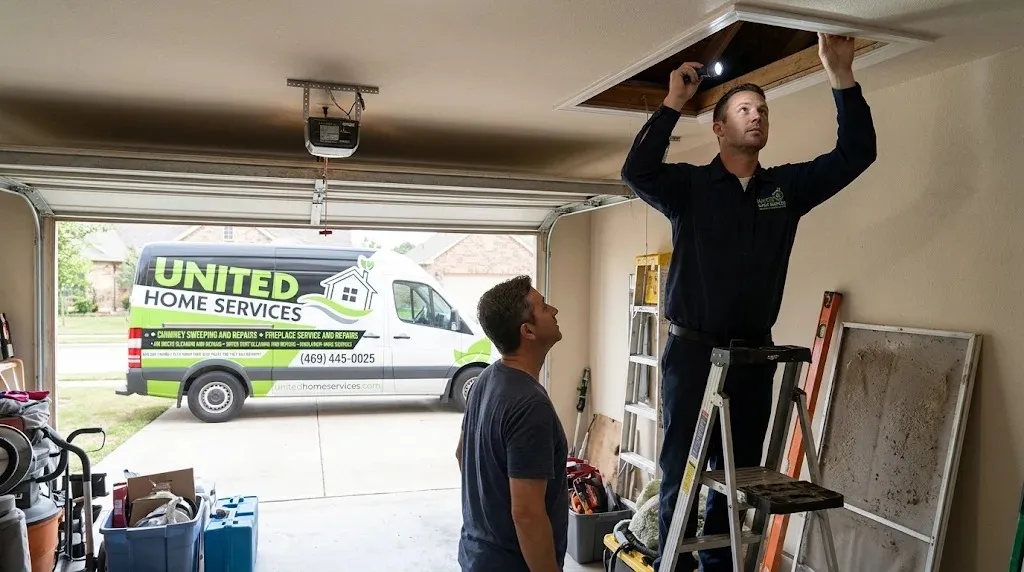
Air naturally moves through your home. Warm air rises and escapes through the upper areas, which pulls air in from below, and attic air can be drawn into living spaces through small openings. These openings include attic hatches, recessed lights, wiring holes, plumbing penetrations, and leaky ducts. When the attic air is full of dust, insulation fibers, mold spores, and pest debris, that is what gets pulled into your rooms.
3. Heat Stresses Ducts and Insulation
In the DFW area, attic temperatures in summer can climb far above the temperature outside. Extreme heat can dry out duct sealants, make flexible ducts brittle, and shorten the life of insulation. When ducts crack or separate, they leak conditioned air and pull in attic air, which carries dust and contaminants straight into your HVAC system.
4. Wet Insulation Loses Effectiveness
Moisture compresses and soaks insulation, which reduces its ability to resist heat. It can also hold odors and become a breeding ground for microbes. Contaminated insulation can release particles into the air when disturbed or when air moves through it.
5. Heat Can Increase Off-Gassing
High temperatures can cause building materials, adhesives, and stored items in the attic to release volatile organic compounds, often called VOCs. Those compounds can travel into living spaces through the same air leaks.
6. Pests Are Attracted to Damp, Warm Spaces
Rodents, insects, and birds often nest in poorly maintained attics. Their droppings, nesting materials, and dead insects add allergens to the air that can reach your home.
Warning Signs of Poor Attic Ventilation
Watch for these signs:
- A musty or stale smell, especially near ceilings or upstairs rooms
- Upper floors that are much hotter than lower floors
- High cooling bills in summer
- Visible mold, dark stains, or damp patches on ceilings
- Frost, dampness, or condensation on roof decking or nails
- Peeling paint or warped ceiling drywall
- Shingles that curl, crack, or age early
- Increased dust, allergy symptoms, or coughing indoors
- Rust on nails, metal ducts, or fasteners in the attic
Common Causes of Poor Attic Ventilation
- Not enough vents: A common guideline is about 1 square foot of net free ventilation area for every 150 square feet of attic floor, though some setups allow 1 per 300 with the right balance. Check local code.
- Blocked soffit vents: Insulation often covers the intake vents, which stops air from entering.
- Unbalanced intake and exhaust: Too many exhaust vents and too few intake vents prevents proper flow.
- Bathroom or kitchen fans venting into the attic: This dumps moist air right where it should not go.
- Mixing vent types: Combining ridge vents with powered fans or gable vents can disrupt airflow.
- Pest nests or debris: Birds, wasps, and leaves can block vents.
- Roof or storm damage: Leaks let water in, which adds moisture.
How to Improve Attic Ventilation and Indoor Air Quality
1. Inspect the Attic
Look for damp insulation, mold, rusted nails, blocked vents, and signs of pests. Always wear protective gear and work in the early morning, since attics get dangerously hot. If you see widespread mold or damage, call a professional.
2. Clear Blocked Soffit Vents
Make sure insulation is not covering the intake vents. Baffles, also called rafter vents, keep insulation away from soffits and maintain airflow.
3. Balance Intake and Exhaust
Add intake or exhaust vents as needed so air can flow in low and out high. A roofing or ventilation professional can calculate the right amount for your attic size.
4. Vent Fans Outside
Bathroom, kitchen, and dryer vents should exhaust to the outdoors, not into the attic.
5. Seal Air Leaks Between the Attic and Living Space
Use caulk, spray foam, or weatherstripping around attic hatches, recessed lights, wiring, and plumbing penetrations. This stops attic air from entering your home.
6. Seal and Insulate Ducts
Seal duct joints with mastic or UL 181-rated foil tape, and wrap ducts with properly rated insulation and a vapor barrier. This protects your air quality and helps your HVAC system run efficiently.
7. Be Careful With Powered Attic Fans
Powered fans can pull conditioned air out of your home through ceiling leaks if the attic is not sealed well. Seal the air leaks first, and ask a professional whether a fan makes sense for your home.
8. Check Your Insulation
Replace wet, moldy, or compressed insulation, and add more if the depth is below recommended levels for your area.
9. Schedule Professional Evaluation
Attic and duct problems often go together. Professional duct inspection services can check ducts in your attic for leaks, damage, dust buildup, and signs of moisture, and help you decide on the next steps.
Maintenance Tips
- Inspect the attic twice a year, ideally before summer and winter
- Keep vents free of debris, nests, and insulation
- Fix roof leaks quickly
- Change HVAC filters regularly
- Control indoor humidity
- Keep stored items off ducts and away from vents
Final Thoughts
Your attic and your indoor air are more connected than they seem. Poor ventilation traps heat and moisture, encourages mold, damages ducts, and lets contaminated air slip into your living space. Fortunately, the fixes are straightforward: balance airflow, seal leaks, protect your ducts, and inspect regularly. A well-ventilated attic helps your home stay cooler, drier, and healthier all year long.