
When an emergency happens, people need to leave a building quickly and without confusion. A fire, a power failure or a sudden crowd surge leaves no time to search for keys or figure out a complicated latch. That is exactly why panic bars exist. Panic bar installation for commercial buildings is not just a convenience upgrade. It is a life-safety measure that protects occupants, helps you meet code requirements and reduces your liability as a property owner. At DFW Affordable Locksmith, we help business owners and facility managers choose, install and maintain the right exit hardware. This guide explains how panic bars work, which types suit different doors and what to know about compliance.
What Is a Panic Bar and Why Does It Matter?
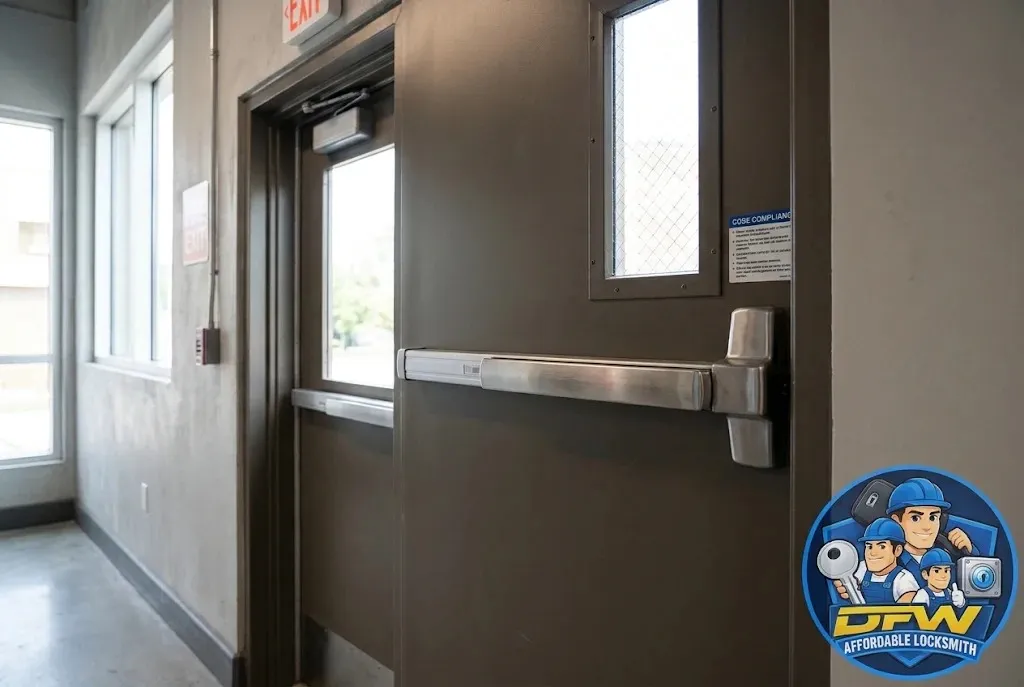
A panic bar, also called an exit device, is a horizontal bar mounted on the inside of an exit door. Pressing against it releases the latch, so the door opens immediately in the direction of travel. Unlike a knob or a deadbolt, it requires no key, no twisting and no special knowledge to operate. People under stress or in smoke-filled spaces can push through the door without hesitation. Meanwhile, the door can remain secure from the outside, so you do not have to choose between safety and protection. Proper panic bar installation for commercial buildings gives you both.
Where Panic Bars Are Commonly Required
Requirements depend on how a building is used and how many people it holds. Panic hardware is often required on exit doors in assembly spaces such as restaurants, event venues, churches and theaters, and in schools, gyms and other places where large groups gather. Retail stores, warehouses, offices and medical facilities may also need it depending on occupant load and local rules. Because codes vary by occupancy type and by city, the safest approach is to confirm requirements with your local fire marshal or building official before you buy hardware. A licensed locksmith can help you interpret what applies to your property.
Types of Panic Bars for Commercial Doors
Rim Exit Devices
Rim devices mount on the surface of the door and latch onto a strike on the frame. They are the most common choice for single doors and are relatively straightforward to install and service.
Vertical Rod Devices
Surface and concealed vertical rod devices latch at the top and bottom of the door rather than at the side. They are popular for double doors without a center post, since they do not need a removable mullion.
Mortise Exit Devices
Mortise devices fit inside a pocket cut into the door edge. They are very durable and suit heavy-traffic entrances, though they require careful preparation of the door.
Fire-Rated and Alarmed Options
Fire-rated panic bars are tested for use on fire doors and carry the labeling required for those openings. Alarmed exit devices sound a warning when someone pushes the bar, which helps deter misuse of doors meant only for emergencies. Some doors also use electrified or delayed egress devices where the code allows, so it is important to match the hardware to the door’s purpose.
Key Compliance Considerations
Compliance is about more than the device itself. The bar must release the latch with a simple push, without a key or a tight grasp, and it should be mounted within the height range that codes allow. Doors must swing in the direction of exit travel where required, and the path outside the door must stay clear. Fire doors need hardware that carries the correct label and that does not interfere with how the door is rated. Accessibility rules also matter, since people with limited strength or mobility must be able to use the device. Never chain, lock or block an exit door, even temporarily, because this is a serious safety and legal risk.
Why Professional Installation Is Essential
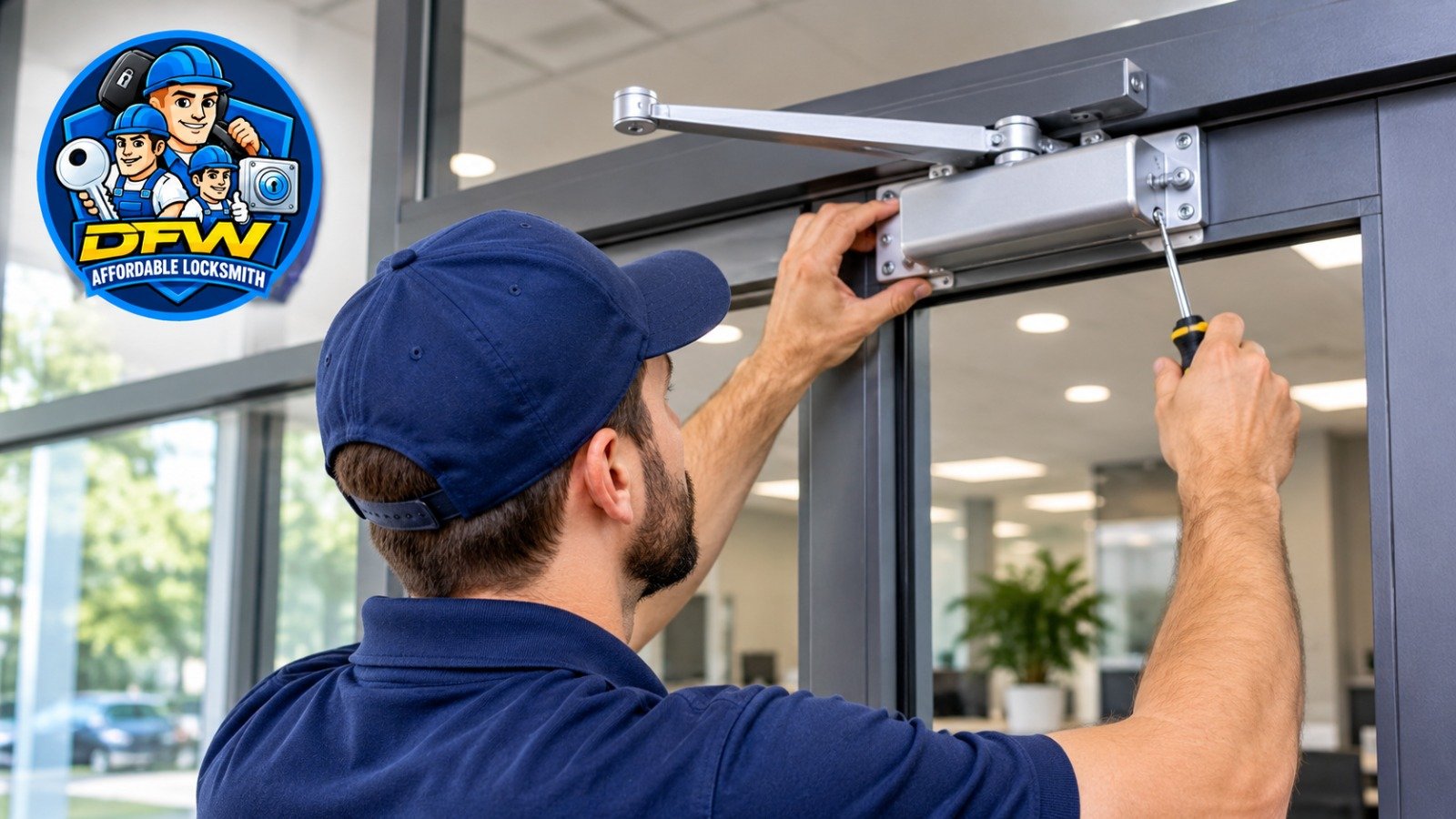
Panic bars look simple, but a poor installation can fail when it matters most. The door must hang straight, close and latch correctly, and the strike must align with the latch. Drilling into a fire-rated door the wrong way can void its rating, and using the wrong hardware on a rated opening can fail an inspection. Double doors, glass storefronts and older frames add further complications. A professional checks the door, the frame and the surrounding hardware, then installs the device so it operates smoothly and passes inspection. Our team also tests the finished opening to confirm it releases freely and secures properly.
Maintenance and Inspection Tips
Even a perfect installation needs routine care. Test every exit device regularly to make sure the bar depresses smoothly and the latch retracts fully. Check that doors close and latch on their own, that no one has added locks or chains and that alarms still sound where installed. Lubricate moving parts as the manufacturer recommends, and tighten loose screws before they become a bigger problem. If a bar sticks, rattles or fails to release, repair it right away rather than waiting. Keeping records of inspections and repairs can also help during fire marshal visits and insurance reviews.
Why Choose DFW Affordable Locksmith
DFW Affordable Locksmith is a licensed and insured provider serving homes, businesses and vehicles across the Dallas–Fort Worth area. Our commercial team handles exit devices, high-security locks, master key systems and access control, so your doors work together as one coordinated system. We offer clear, upfront pricing, quick response and quality workmanship backed by experienced technicians. You can learn more about our commercial locksmith services in DFW and how we protect businesses of every size.
Panic Bar Installation FAQs
Does every commercial building need panic bars?
Not always. Requirements depend on the building’s use, occupant load and local code, so check with your fire marshal or ask a licensed locksmith.
Can a panic bar be installed on an existing door?
In most cases, yes. We inspect the door and frame first to confirm compatibility, then recommend the right device.
Can I add a key or lock to a panic bar door?
Exit doors must remain easy to open from the inside at all times. Outside trim or a key cylinder can control entry from outside, but it must never block exit.
How often should panic bars be inspected?
Regular inspection is a smart habit, and fire doors often require scheduled checks. Test your devices routinely and fix problems immediately.
Do you repair existing panic bars?
Yes. We repair and replace worn, sticking or damaged exit devices to restore safe operation.
Get Panic Bar Installation You Can Trust
Safe exits protect your people, your property and your business. If you are planning panic bar installation for commercial buildings or need help with an older device, contact DFW Affordable Locksmith to schedule an assessment. We will review your doors, explain what your building needs and install hardware that keeps every exit safe, secure and ready when it counts.