
Sliding glass doors bring light into a room and open up the backyard, which is why so many Dallas homes have them. They’re also one of the weaker spots in a house. At DFW Affordable Locksmith, we see the same pattern again and again: a beautiful door with a flimsy factory latch, a worn track, and a lock that doesn’t really lock.
The short answer: The best way to secure a sliding glass door is to use several layers together. Make sure the door sits properly in its track and can’t be lifted out, add a solid secondary lock, protect or reinforce the glass, and keep the area visible and well lit. A security bar on its own isn’t enough.
Why Sliding Doors Are a Weak Point
- The factory lock is usually a latch. It hooks into the frame, but it isn’t a deadbolt and it doesn’t resist force well.
- The door can be lifted out of its track. When rollers are worn or the fit is loose, a determined person can lift and tilt the panel.
- The glass is a big surface. Unlike a solid door, there’s a lot of breakable material right next to the lock.
- The location is private. Backyard doors are often hidden behind fences and landscaping.
- They get left unlocked. Hot weather, pets, and busy households make this one of the most common problems.
Start With the Track and Rollers
Dust, grit, and pet hair build up fast in a Texas backyard, and summer heat makes metal frames expand and contract. A dirty track and worn rollers cause the door to drag, rattle, or sit loosely, and a door that’s hard to close is a door people stop locking.
Vacuum the track, wipe it clean, and use a light silicone lubricant. If the door still sticks or wobbles, the rollers likely need adjusting or replacing.
Then do a simple lift test. With the door closed and locked, try lifting it slightly. If it moves, the door needs anti-lift protection. A locksmith can adjust the rollers, add anti-lift blocks, or fit pins or screws in the upper track so the panel can’t be raised out of place.
Upgrade the Lock
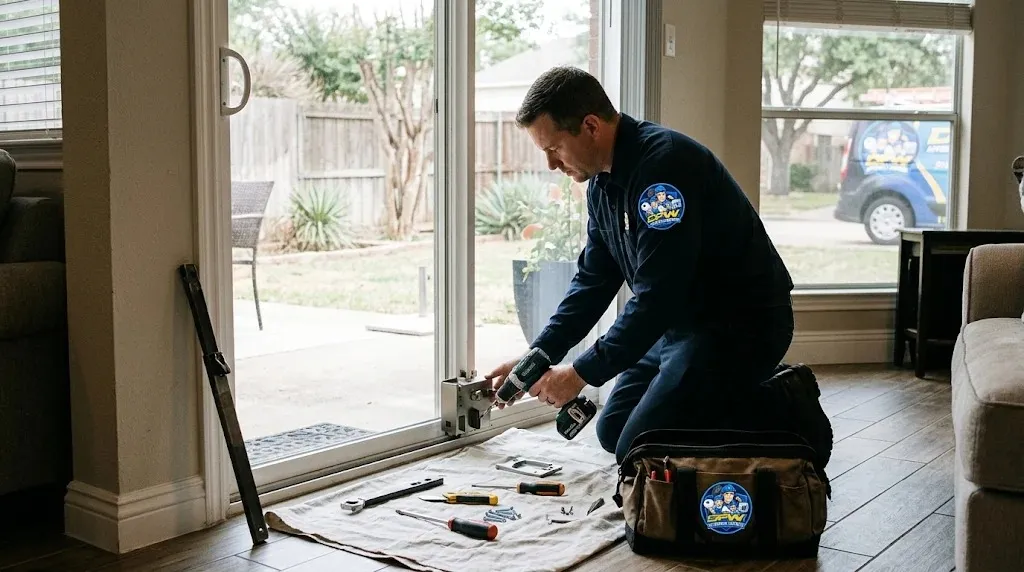
The latch that comes on many sliding doors is the first thing to improve. Better options include a keyed patio lock, a secondary bolt or pin lock, and a mortise-style lock where the frame allows. The key is to choose hardware that anchors into the door frame, not just the glass edge, and that suits your frame material, since aluminum and vinyl need different fittings.
This is exactly the kind of work our residential locksmith services cover. We inspect the door first, then recommend a lock that fits the frame and the way your household actually uses the door.
Add a Physical Barrier
A security bar or a track blocker is an inexpensive extra layer. It stops the door from sliding open even if the latch is defeated. Just be realistic about its limits. A bar won’t help if someone breaks the glass and reaches in, so treat it as a supplement to good locks, not a replacement.
Protect the Glass
Security film applied to the glass holds it together when struck, which slows down forced entry and makes noise. Laminated glass offers even more resistance but is a bigger investment, usually considered when a door is being replaced anyway. Contact sensors or glass-break alarms add warning if someone does try to get in.
Make the Door Visible and Unattractive
- Install motion-activated lighting near the back door.
- Trim shrubs and trees that hide the doorway.
- Keep ladders, tools, and heavy objects out of the yard where they can be used against you.
- Lock fence gates when you can.
- Consider a camera or door sensors that alert your phone.
- Use curtains or blinds so outsiders can’t easily see what’s inside.
Habits That Matter in a Hot Climate
Texas summers tempt people to leave the door cracked for fresh air or for the dog. Use a vent lock that holds the door partly open in a safe position, rather than leaving it unlatched. Remember that a screen door lock is not a security lock. Teach everyone in the house to lock the door every night and before leaving, and keep the key for any patio lock somewhere safe rather than on a hook beside the door.
When Upgrading Isn’t Enough
Sometimes the door itself is the problem. Rusted rollers, bent frames, cracked tracks, and foggy or damaged glass mean the door has reached the end of its life. In that case, replacing the door, or switching to a hinged design with a multi-point lock, can be the better investment. A locksmith can assess the condition honestly and tell you whether a repair will hold or whether it’s time to start over.
Frequently Asked Questions
Are sliding glass doors easy to break into?
They can be, especially when the factory latch is the only protection and the door sits loosely in its track. Adding the right locks and anti-lift measures makes a big difference.
Does a wooden dowel in the track really work?
It stops the door from sliding, but it doesn’t prevent lifting or glass breakage. Use it as a backup, not your main defense.
Can a lock be added to an older sliding door?
Usually yes. A locksmith can fit a secondary lock or bolt, as long as the frame is in good condition and compatible with the hardware.
Is security film worth it?
For many homeowners, yes. It holds the glass together under impact, which slows entry and discourages attempts.
Can I keep the door slightly open for air and still stay secure?
Yes, with a proper vent lock designed to hold the door in a limited-open position. Don’t rely on the screen door or an unlatched panel.
Should I repair or replace an old sliding door?
If the track, rollers, or frame are damaged beyond adjustment, or the glass is compromised, replacement may be the safer choice. A quick inspection will tell you which makes more sense.