
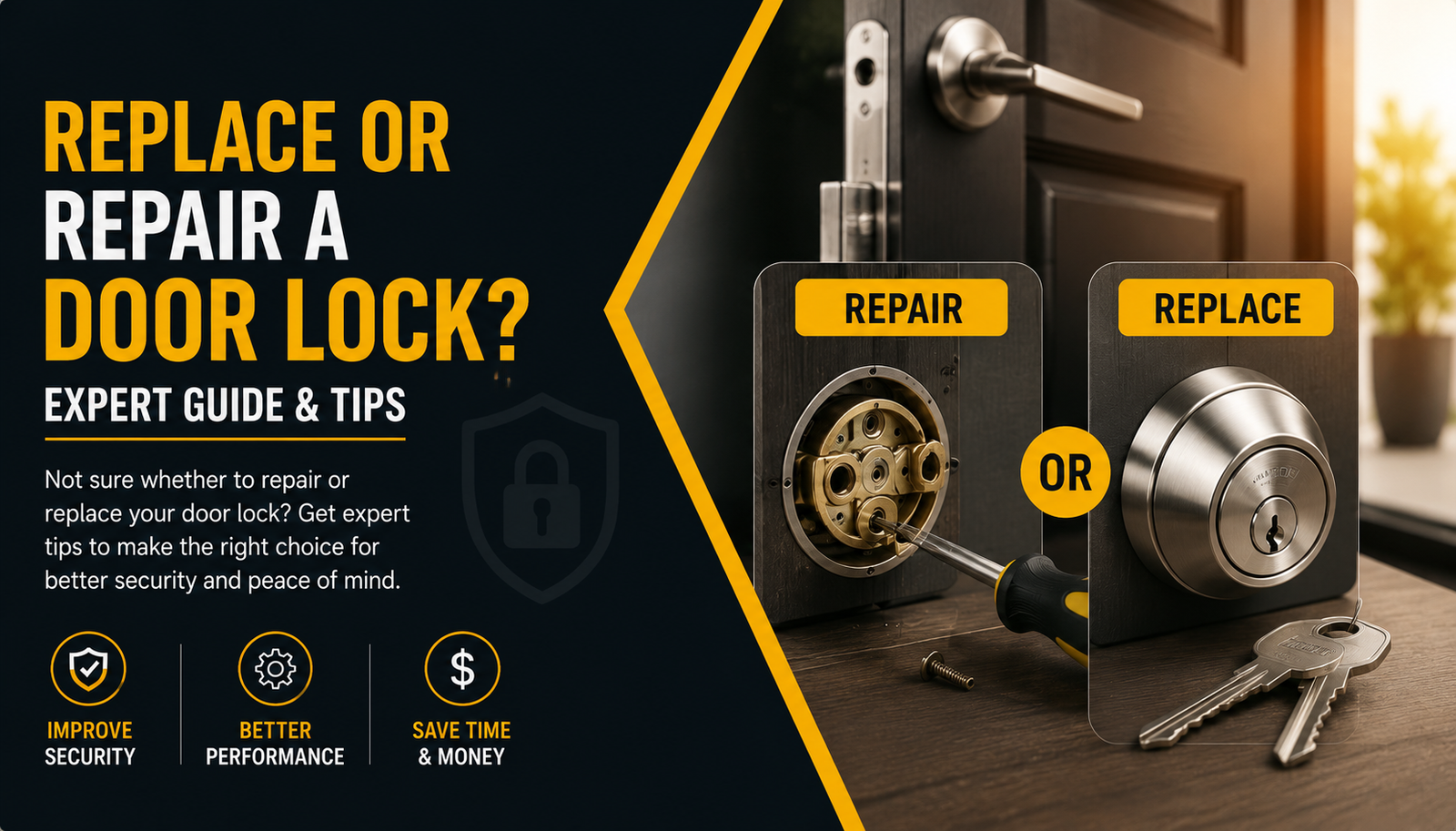

Repair a door lock when the problem is a single worn part, like a sticky cylinder or a loose strike plate, and the lock is under 7 years old. Replace it when the mechanism is cracked, the key wears down fast, or the lock has failed more than once in the past year. DFW Affordable Locksmith LLC handles both calls every week across Garland and the DFW area, and this guide breaks down exactly how to tell the difference before you spend money on the wrong fix.
What Does ‘Repair vs. Replace’ Mean for a Door Lock?
Repairing a door lock means fixing or replacing one internal part, such as the cylinder, springs, or strike plate, while keeping the rest of the hardware in place. Replacing a door lock means removing the entire lock assembly and installing a new unit, often paired with fresh keys or a smart lock upgrade. The two paths look similar from the outside, but a locksmith checks the internal mechanism before recommending either one.
Many Garland homeowners call about a lock that feels stiff or a key that no longer turns smoothly, not realizing the fix could be as simple as cleaning and lubricating the mechanism rather than a full swap.
Why Does This Decision Matter?
This decision matters because a failing door lock is a direct security risk, not just an inconvenience. A worn lock cylinder can be picked or bumped more easily than a newer one, and a lock that sticks in humid Texas summers may jam completely during an emergency. Front doors in the DFW area also take extra wear from temperature swings between hot summers and occasional winter freezes, which speeds up mechanical fatigue compared to milder climates.
A lock that has become one of the common reasons people call locksmiths in Texas is often close to the end of its useful life, especially if the same issue keeps coming back.
How Do You Decide Between Repair and Replacement?
DFW Affordable Locksmith LLC inspects four things before recommending repair or replacement: lock age, damage location, key wear, and repeat failure history.
1. Check the Lock’s Age
A quality door lock typically lasts 7 to 15 years with normal use. A lock under 7 years old with one isolated issue is usually worth repairing.
2. Identify the Damage
A single worn part, like a spring or strike plate, points toward repair. A cracked cylinder, bent bolt, or damaged mechanism inside the door points toward replacement.
3. Check How the Key Behaves
A key that turns roughly but still works usually means the lock can be repaired. A key that won’t unlock the door at all, or one that has snapped inside the cylinder, often means the internal pins or cylinder are too worn to save.
4. Review Failure History
One repair in several years is normal wear and tear. Two or more failures within 12 months signals the lock is breaking down faster than repairs can keep up.
Signs You Need Repair vs. Signs You Need Replacement
The table below compares the clearest signs pointing toward each option.
| Signs You Likely Need Repair | Signs You Likely Need Replacement |
| Lock is stiff but still turns | Cylinder or bolt is cracked or bent |
| Loose strike plate or misaligned deadbolt | Key wears down fast or snaps repeatedly |
| One key stopped working, others still do | Lock is 10+ years old with repeat issues |
| Minor rust on the surface only | Rust or corrosion inside the mechanism |
A door with deadbolt misalignment often just needs adjustment or a strike plate repair, not a full lock replacement, unless the misalignment has already damaged the bolt itself.
Benefits of Repairing a Door Lock
- Lower cost than a full lock replacement
- Keeps existing keys working, which matters for shared households
- Faster fix, often completed in under an hour
- A practical choice when the lock body is still structurally sound
Repair makes sense whenever the lock’s core mechanism is healthy and only a specific part has failed, such as springs, pins, or a strike plate.
Benefits of Replacing a Door Lock
- Improved resistance to picking and bumping with modern hardware
- Option to upgrade to a smart lock with keyless entry
- Fewer future service calls once old, worn parts are gone
- A fresh start after a lost key or a security concern
Homeowners upgrading for security reasons often ask about the difference between fixing an old lock and starting over with new hardware. Rekeying vs. changing the lock explains when a simple rekey solves the problem and when full replacement is the safer long-term choice.
Common Mistakes Homeowners Make
The most common mistake is repairing the same lock repeatedly instead of asking whether replacement would cost less over time. Another common mistake is ignoring a sticky lock until the key snaps inside it during an emergency.
- Using graphite or oil incorrectly, which can gum up the mechanism further
- Forcing a stiff key instead of having the lock inspected
- Assuming all smart locks need full door hardware replacement
- Ignoring a loose handle that signals a bigger internal problem
A sticky lock is one of the most common early warning signs before a full lockout, and catching it early usually keeps the fix in repair territory instead of replacement. General background on how pin tumbler and cylinder locks work mechanically is available onWikipedia, which helps explain why certain parts wear out faster than others.
Door Lock Repair and Replacement Cost Factors
Door lock repair cost depends mainly on which part failed and how urgent the job is, while replacement cost depends on lock type and whether it includes a smart lock upgrade. The table below outlines the main factors that affect pricing.
| Factor | Repair Impact | Replacement Impact |
| Lock type | Standard cylinder repair is lower cost | Smart or high-security locks raise cost |
| Urgency | Emergency same-day repair costs more | Scheduled installs cost less than rush jobs |
| Number of doors | Single lock repair is most common | Whole-home rekey or replacement costs more |
| Hardware grade | Basic part swaps are affordable | Commercial-grade hardware raises cost |
Commercial properties in Garland often face different cost factors than homes, since commercial door lock replacement usually involves higher-grade hardware built for heavier daily use.
How to Choose the Right Option for Your Door
Choose repair if your lock is under 7 years old, the issue is isolated to one part, and there are no signs of internal damage. Choose replacement if the lock is older than 10 years, repairs keep repeating, or you want to upgrade to smarter, more secure hardware.
- Get a professional inspection before assuming either option
- Ask for a straightforward comparison of repair vs. replacement cost
- Prioritize security risks over minor cosmetic wear
- Consider a smart lock upgrade if you are replacing anyway
Many homeowners research this decision on their own before calling a locksmith, and discussions on Locksmithing about door lock problems often land on the same advice: get a professional opinion before assuming a full replacement is necessary.
Frequently Asked Questions
How long does a door lock last before it needs replacing?
A standard door lock typically lasts 7 to 15 years with normal use before it needs replacement. Heavy daily use, humidity, and temperature swings in the DFW area can shorten that lifespan without regular maintenance.
Is it cheaper to repair or replace a door lock?
Repair is almost always cheaper upfront, especially for a single worn part like a spring or strike plate. Replacement becomes the better value if repairs keep repeating or the lock is old enough that matching parts are hard to find.
What are the signs a door lock needs to be replaced?
A cracked cylinder, a key that wears down quickly, repeated failures within a year, and internal rust are the clearest signs a door lock needs replacement. A lock that is simply stiff or has one loose part usually only needs repair.
Can a broken door lock be repaired instead of replaced?
Yes, many broken door locks can be repaired if the damage is limited to a single part, like a spring, pin, or strike plate. A locksmith can inspect the mechanism to confirm whether repair will hold up long-term.
Should I replace a lock after losing my keys?
Replacing or rekeying the lock after losing your keys is the safest option, especially if the keys included your address or were on a shared keyring. Rekeying is often enough if the lock hardware itself is still in good condition.
Final Thoughts
Repair your door lock when the issue is isolated and the hardware is still under 10 years old. Replace it when repairs keep repeating, the mechanism is damaged, or you want stronger, more modern security. DFW Affordable Locksmith LLC can inspect your door lock in Garland and give you an honest recommendation before you spend a dollar on either option.