

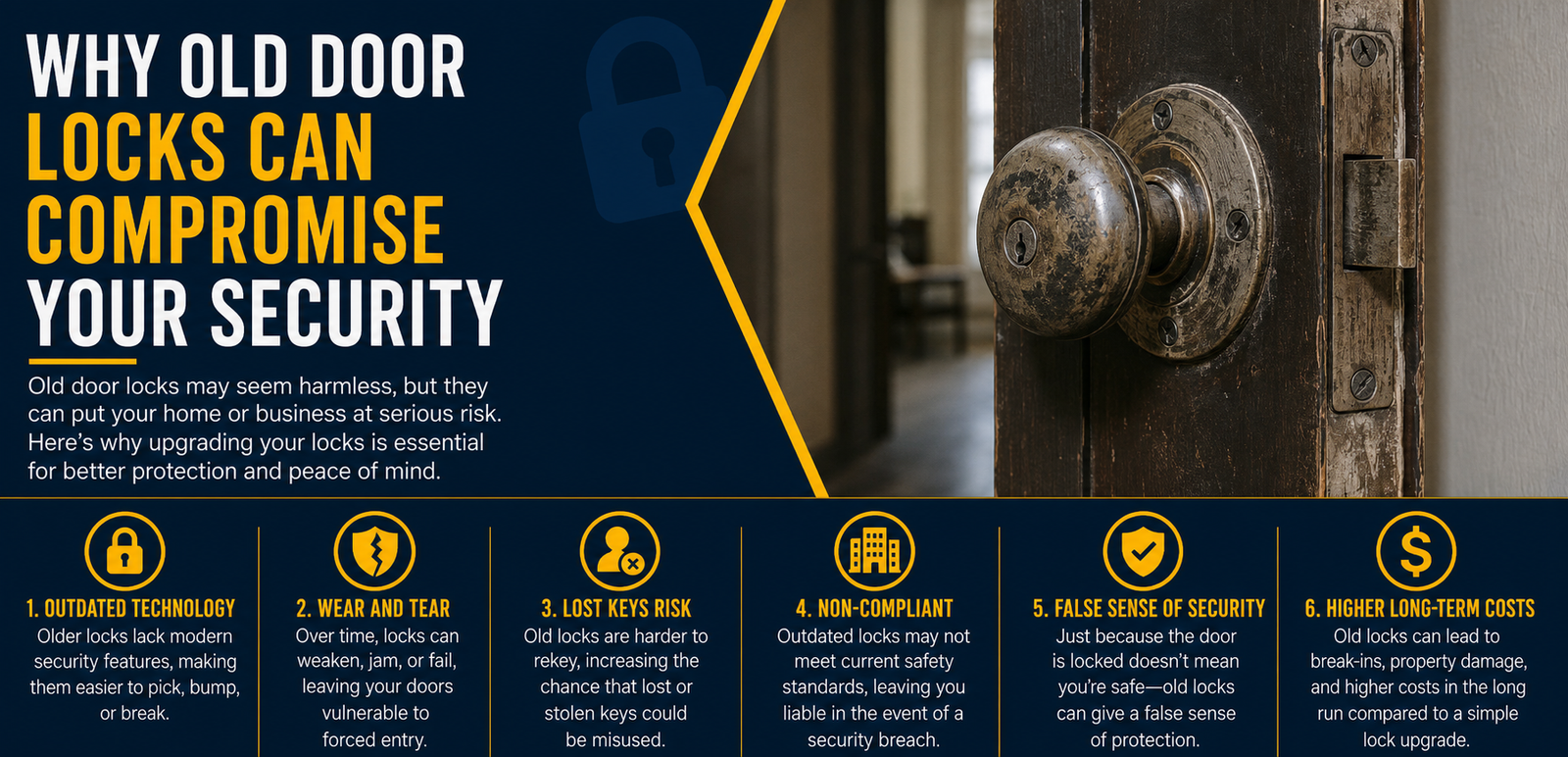

Your door locks are your home’s first line of defense against unauthorized entry. While many homeowners focus on alarm systems, security cameras, and outdoor lighting, they often overlook one of the most important security features the locks themselves. Like any mechanical device, door locks wear down over time. Years of daily use, exposure to the elements, and outdated technology can make older locks less reliable and easier for intruders to compromise.
Although an aging lock may still appear to function normally, hidden problems can significantly reduce your home’s security. Understanding the hidden security risks of old door locks can help you identify when it’s time to upgrade and better protect your family, belongings, and property. If you’re looking for a cheap locksmith in DFW, choose one that offers affordable pricing without compromising on quality. A professional locksmith can inspect your locks, recommend cost-effective security upgrades, and provide reliable lock repair or replacement to keep your property safe within your budget.
Why Door Locks Deteriorate Over Time
If your property relies on aging locks, it may be time to consult a Commercial Locksmith in DFW for a professional security assessment. Commercial locksmiths can inspect existing locking systems, identify hidden signs of wear, and recommend upgrades that improve both security and convenience. Whether it’s replacing outdated hardware, installing high-security locks, or upgrading to modern access control solutions, proactive improvements help protect your business, employees, and valuable assets from evolving security threats.
Worn Internal Components Can Cause Lock Failure
Every lock contains multiple internal parts, including pins, springs, cylinders, and tumblers. Over time, these components wear out through repeated daily use.
As internal parts become worn, the key may begin sticking, require extra force to turn, or occasionally fail to unlock the door. In some cases, the lock may suddenly stop working altogether, leaving homeowners locked inside or outside their property.
Mechanical failure can also prevent the deadbolt from fully extending into the strike plate, reducing the lock’s ability to resist forced entry.
Replacing worn locks before complete failure helps maintain reliable home security.
Old Locks Are Easier to Pick
Many older lock designs were manufactured before modern security standards became common. Traditional pin tumbler locks without advanced security features are often more vulnerable to lock picking.
Experienced intruders may exploit worn internal components, making older locks even easier to manipulate than when they were first installed. Years of wear create additional internal movement that can reduce the lock’s resistance to unauthorized entry.
Upgrading to modern high-security locks significantly improves protection against picking techniques.
Vulnerability to Lock Bumping
Lock bumping is a method that uses a specially modified key to manipulate the pins inside certain traditional locks. Many older residential locks remain susceptible to this technique because they lack bump-resistant security features.
While not every burglary involves lock bumping, homes with outdated lock systems generally provide fewer obstacles for experienced criminals.
Many modern deadbolts now include bump-resistant cylinders that offer improved protection against this type of attack.
Rust and Corrosion Weaken Security
Exterior door locks are constantly exposed to rain, humidity, dust, and changing temperatures. Over time, moisture causes rust and corrosion inside the lock mechanism, affecting both performance and security.
Corroded locks may become difficult to operate, fail unexpectedly, or no longer engage securely with the strike plate. Rust can also weaken metal components, making the lock less durable under force.
Regular inspections help identify corrosion before it creates a security concern.
Loose Locks and Hardware
Over years of daily use, screws securing the lock and strike plate can gradually loosen. A loose lock may shift slightly when operated, reducing its effectiveness and making forced entry easier.
Similarly, worn strike plates or damaged door frames prevent the deadbolt from fully engaging, weakening the entire locking system regardless of the quality of the lock itself.
Professional locksmiths inspect both the lock and surrounding hardware to ensure maximum security.
Lost or Unreturned Keys
One overlooked security risk involves keys that are no longer under your control. If you’ve lived in your home for many years, previous owners, contractors, housekeepers, tenants, or neighbors may still possess copies of your keys. Even if your lock functions perfectly, unauthorized key copies represent a potential security vulnerability. Rekeying or replacing old locks eliminates this risk by rendering previous keys useless while providing new keys exclusively for current occupants. If you’ve experienced a lost key, break-in, or any situation that compromises your property’s security, a 24/7 Hour Emergency Locksmith in DFW can respond quickly to rekey or replace your locks, restoring your safety and giving you complete control over who has access to your home or business.
Outdated Lock Technology
Security technology has advanced significantly over the past decade. Older locks often lack many of the protective features now considered standard.
Modern lock systems may include:
- Anti-pick cylinders
- Bump-resistant technology
- Drill-resistant plates
- Reinforced deadbolts
- Smart lock integration
- Keyless entry systems
- Temporary digital access codes
- Activity monitoring through mobile apps
Upgrading older locks improves convenience while significantly strengthening overall home security.
Increased Risk After a Break-In Attempt
Even if a burglar fails to gain entry, attempted forced entry can weaken a lock internally. Damage may not always be visible from the outside.
A lock that has experienced excessive force, prying, or impact may no longer provide the same level of protection. Continuing to use a compromised lock leaves your home more vulnerable to future break-in attempts.
After any attempted burglary, a professional locksmith should inspect all affected locks and recommend repairs or replacement if necessary.
Warning Signs Your Door Locks Need Replacement
Many homeowners ignore early warning signs because the lock continues functioning most of the time. However, these symptoms often indicate internal wear that will continue to worsen.
Common signs include:
- Keys sticking or becoming difficult to turn
- Loose lock cylinders
- Rust or visible corrosion
- Difficulty locking or unlocking the door
- Worn or damaged keys
- Loose door handles
- Deadbolt failing to extend completely
- Frequent key jams
- Visible damage around the lock
Addressing these issues promptly helps prevent lock failure and improves home security.
Benefits of Replacing Old Door Locks
Installing new locks offers far more than improved appearance. Modern locking systems provide stronger protection against forced entry while improving reliability and convenience.
Benefits include enhanced security, smoother operation, increased resistance to lock picking, improved durability, better weather resistance, and compatibility with today’s smart home technology.
Many homeowners also enjoy the convenience of keyless entry, remote locking, and customized digital access for family members or trusted visitors.
Replacing aging locks is one of the most effective ways to strengthen home security without requiring major renovations.
Why Hire a Professional Locksmith?
Although replacing a basic lock may appear straightforward, proper installation is essential for maximum security. A professional locksmith ensures the lock is correctly aligned, securely mounted, and fully engages with the strike plate.
Locksmiths can also recommend the most appropriate lock type based on your home’s security needs, perform rekeying services, duplicate keys, and inspect all entry points for potential vulnerabilities.
Professional installation provides peace of mind that your home’s primary security barrier is functioning as intended.
Conclusion
The hidden security risks of old door locks often go unnoticed until a problem occurs. Worn internal components, outdated technology, corrosion, loose hardware, and unauthorized key copies all reduce your home’s ability to resist unauthorized entry.
Replacing aging locks before they fail improves security, enhances convenience, and provides greater confidence that your home and family remain protected. Whether you choose high-security deadbolts or modern smart locks, upgrading outdated locking systems is a simple investment that delivers long-term peace of mind.
Frequently Asked Questions
How long do door locks typically last?
Most quality door locks last 7 to 15 years, depending on usage, weather exposure, maintenance, and the quality of the hardware.
Should I replace my locks after buying a new home?
Yes. Replacing or rekeying your locks ensures previous owners, contractors, or anyone with old keys can no longer access your property.
Can old locks be repaired instead of replaced?
Minor issues can often be repaired, but locks with significant wear, corrosion, or outdated security features are usually better replaced to improve protection.
Are smart locks more secure than traditional locks?
Many modern smart locks include advanced security features such as encrypted access, temporary digital codes, activity logs, and keyless entry. However, choosing a high-quality smart lock and having it professionally installed are essential for maximum security.
How do I know if my door lock is no longer secure?
Difficulty turning the key, loose hardware, rust, sticking mechanisms, incomplete deadbolt engagement, or signs of attempted forced entry all indicate that your lock should be inspected or replaced by a professional locksmith