
When homeowners invest in a smart lock, one of the most common questions is about smart lock battery life expectancy. While manufacturers often advertise impressive battery performance, the real answer depends on several factors including usage patterns, connectivity settings, environmental conditions, and the type of lock installed. Understanding how long a smart lock battery typically lasts can help you avoid unexpected lockouts, improve home security, and maintain reliable access to your property.
Most modern smart locks are designed to operate efficiently for several months on a single set of batteries. However, actual battery life varies significantly depending on usage. Frequent locking and unlocking, continuous Wi Fi connectivity, remote access features, and smart home integrations can all impact battery performance. At DFW Affordable Locksmith, we regularly help homeowners troubleshoot battery-related smart lock issues and replace failing systems before they become security concerns.
Understanding Smart Lock Battery Life Expectancy
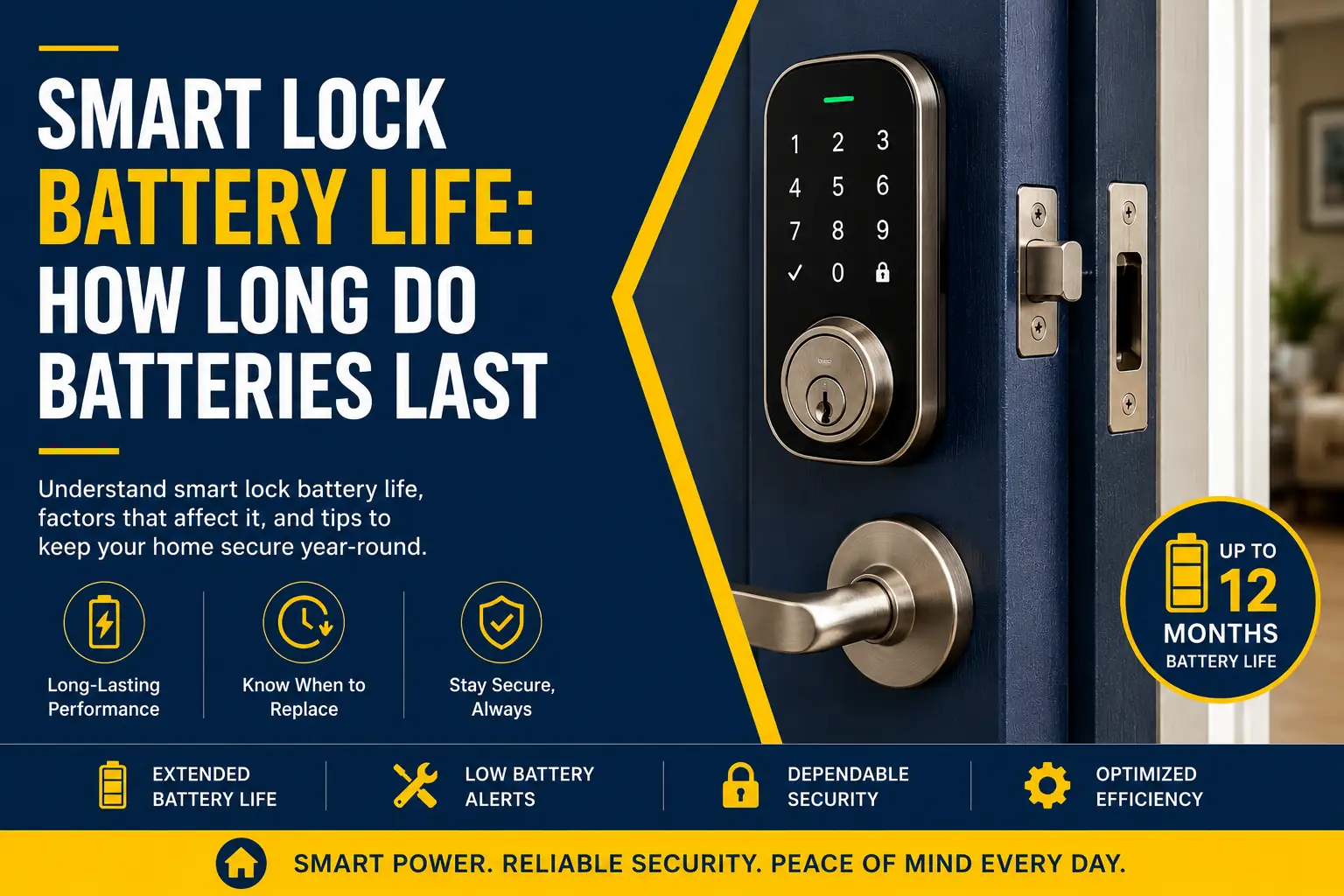
The average smart lock battery life expectancy ranges between 6 and 12 months. Many premium models advertise up to 12 months of operation on a single set of batteries, while some advanced low-power devices can exceed that under ideal conditions.
Several factors determine how long your lock batteries will last:
- Frequency of locking and unlocking
- Type and quality of batteries used
- Wi Fi connectivity requirements
- Remote access activity
- Temperature fluctuations
- Smart home compatibility features
- Voice assistant integrations
- Firmware updates and software activity
Homeowners often assume all smart locks perform similarly, but battery consumption can vary dramatically between models. Some smart locks with best battery life utilize Bluetooth-only communication, while others constantly maintain Wi Fi connections that consume significantly more power.
How Different Smart Lock Features Affect Battery Life
Wi Fi Connectivity
Wi Fi-enabled locks provide exceptional convenience but often consume more energy than Bluetooth-only alternatives. Features such as remote access, real-time notifications, and cloud synchronization require continuous communication with your network.
If your lock frequently communicates with mobile apps or cloud servers, the battery may drain faster than expected.
Voice Assistant Integration
Many homeowners connect their smart lock to Amazon Alexa Google Assistant ecosystems. While convenient, integrations with Amazon Alexa Google platforms increase communication frequency between devices.
Systems connected to Alexa and Google often perform background status checks that contribute to battery consumption throughout the day.
Auto-Lock Features
Automatic locking functions improve home security but increase motor activity. Every locking cycle requires power, meaning frequent use naturally shortens battery life.
Remote Access Usage
Remote access allows homeowners to unlock doors from anywhere. However, every remote command requires communication between servers, apps, and the lock itself.
Families who frequently monitor and control locks remotely may notice shorter battery intervals compared to users who primarily operate their locks locally.
Battery Types Commonly Used in Smart Locks
Most battery door lock systems rely on one of the following battery configurations:
- AA alkaline batteries
- Lithium AA batteries
- Rechargeable lithium-ion packs
- CR123A batteries
- Proprietary rechargeable battery systems
Lithium batteries generally outperform alkaline batteries due to their ability to maintain voltage levels over longer periods. They also perform better during extreme temperatures, making them popular for outdoor installations.
Many manufacturers of smart locks with best battery life recommend premium lithium batteries for optimal performance.
For broader security considerations involving connected devices, the National Cybersecurity Alliance provides recommendations for maintaining secure connected home technologies and smart home systems.
What Causes Smart Lock Batteries to Drain Faster?
Several overlooked factors can dramatically reduce smart lock battery life.
Poor Door Alignment
When a door is misaligned, the lock motor must work harder to engage the deadbolt. This additional resistance increases power consumption every time the lock operates.
Homeowners experiencing alignment issues may benefit from reading our guide on deadbolt misalignment.
Weak Wi Fi Signal
Locks positioned far from routers often consume additional power while attempting to maintain stable connections. Signal interruptions can significantly increase battery drain.
Extreme Weather Conditions
Temperature changes affect battery chemistry. Cold weather especially impacts battery performance and may trigger low-battery warnings earlier than expected.
Frequent Usage
A front door used dozens of times daily will naturally experience faster battery depletion than a secondary entrance.
How to Extend Smart Lock Battery Life
Homeowners can maximize battery performance by following several best practices:
- Use high-quality lithium batteries
- Keep firmware updated
- Maintain proper door alignment
- Reduce unnecessary remote access activity
- Optimize Wi Fi signal strength
- Replace batteries as a complete set
- Monitor battery alert notifications promptly
- Inspect lock components regularly
Regular maintenance can prevent battery-related issues before they affect security. Our article on lock maintenance provides additional tips for extending lock performance.
Research and Industry Guidance on Electronic Security Devices
Proper maintenance of electronic devices contributes significantly to reliability and energy efficiency. The U.S. Environmental Protection Agency provides guidance on battery management and responsible battery handling practices through its battery stewardship resources. Learn more at EPA Used Household Batteries Guidance.
Battery performance is also influenced by environmental conditions and usage behavior. Research published by the University of Minnesota Extension highlights how temperature and storage conditions affect battery longevity in electronic devices.
DIY Smart Lock Battery Replacement Methods
Many homeowners attempt to replace the battery themselves when they receive a battery alert notification. In many situations, replacing batteries is straightforward and can restore normal lock operation quickly. However, understanding the correct process is essential because mistakes during replacement can create larger problems than the original low-battery warning.
Most manufacturers provide instructions that generally follow these steps:
- Remove the interior battery cover.
- Take out all existing lock batteries.
- Inspect the battery compartment for corrosion or moisture.
- Insert fresh batteries according to polarity markings.
- Use the same battery type recommended by the manufacturer.
- Close the compartment securely.
- Test locking and unlocking functions several times.
- Verify smart home connectivity and remote access functions.
For many battery powered door lock models, replacing batteries takes only a few minutes. However, battery replacement does not always solve the underlying issue causing poor performance.
Checking Battery Contacts
Battery contacts can become dirty, bent, or corroded over time. Even a new digital door lock battery may not function properly if electrical connections are compromised.
Homeowners should carefully inspect contact points and ensure batteries sit firmly in place. Loose connections can trigger false low-battery warnings or intermittent lock failures.
Reviewing Smart Home Settings
Many smart lock owners overlook system settings that increase battery consumption. Features such as constant status reporting, frequent synchronization, and excessive notification activity may reduce battery life.
Reviewing settings connected to Amazon Alexa Google Assistant, Apple Home Kit, and other smart home compatibility platforms can help identify unnecessary battery drain.
Testing Door Alignment
A properly aligned door lock should engage smoothly without resistance. If the motor struggles during locking and unlocking cycles, the lock may consume excessive power.
If you notice sticking, scraping, or bolt resistance, it may indicate a mechanical issue rather than a battery problem. Homeowners experiencing these symptoms often benefit from reviewing our guide on lock problems.
Why DIY Battery Replacement Often Fails
Although replacing batteries seems simple, many homeowners discover that battery warnings continue even after installing fresh batteries. This happens because the battery itself is often not the root cause.
Incorrect Battery Selection
One of the most common mistakes involves using the wrong battery type. Some smart lock systems require lithium batteries, while others are optimized for alkaline batteries.
Mixing battery brands, using partially charged batteries, or combining old and new batteries can create inconsistent voltage levels that confuse the lock’s monitoring system.
Ignoring Mechanical Issues
A battery alert may actually be the result of a lock motor working too hard due to:
- Deadbolt misalignment
- Warped doors
- Worn strike plates
- Improper installation
- Damaged lock mechanisms
Replacing batteries without correcting these issues often results in repeated battery drain and continued service interruptions.
Connectivity Problems
Many homeowners assume weak performance means the battery dies quickly. In reality, poor Wi Fi coverage or network interruptions may be causing the lock to repeatedly reconnect, increasing power consumption.
Professional locksmiths frequently identify network-related causes that homeowners may not recognize during DIY troubleshooting.
Firmware and Software Issues
Modern smart lock systems rely heavily on software. Outdated firmware can cause abnormal battery usage, communication failures, and inaccurate battery reporting.
Without proper diagnostics, homeowners may repeatedly replace batteries while the actual problem remains unresolved.
Risks Associated with Chemical Cleaning Products
Some homeowners attempt to improve lock performance using lubricants, cleaners, or chemical sprays. While maintenance is important, using the wrong products can damage sensitive electronic components.
Potential risks include:
- Corrosion of electrical contacts
- Damage to battery terminals
- Contamination of internal circuitry
- Sensor malfunction
- Premature lock failure
Electronic smart lock systems contain delicate components that differ significantly from traditional mechanical locks. Excessive lubricant application can migrate into electronic assemblies and create expensive repair issues.
Before applying any product to a smart lock, homeowners should verify manufacturer recommendations or consult a professional locksmith.
What Happens When a Smart Lock Battery Dies?
One of the biggest concerns homeowners have is what occurs when the battery dies completely.
Fortunately, most modern smart locks are designed with emergency access options that help prevent lockouts.
Depending on the manufacturer, backup options may include:
- Physical key override
- Emergency external battery terminals
- USB emergency power ports
- Temporary power jump contacts
- Backup keypad access procedures
However, these backup systems only work when homeowners understand how to use them correctly. During emergency situations, confusion can quickly turn into a lockout scenario.
Many of the service calls handled by DFW Affordable Locksmith involve smart lock failures where emergency backup options were unavailable, damaged, or improperly configured.
Signs Professional Locksmith Service Is Needed
Battery replacement is not always enough. Certain symptoms indicate that professional evaluation is the safest and most cost-effective solution.
Repeated Low-Battery Alerts
If your smart lock battery continues triggering warnings shortly after replacement, an underlying electrical or mechanical issue may be present.
Locking and Unlocking Delays
Delayed operation often indicates excessive motor strain, software problems, or power management issues that require professional diagnosis.
Connectivity Failures
When remote access, Google Assistant integration, Apple Home Kit connectivity, or Amazon Alexa Google functionality becomes unreliable, professional troubleshooting can identify the cause more efficiently than trial-and-error DIY methods.
Physical Door Alignment Problems
Visible door sagging, sticking deadbolts, or difficult operation can dramatically reduce battery life while compromising home security.
Unexpected Lockouts
Any lockout involving a smart lock should be evaluated professionally to prevent future failures and ensure reliable operation.
Smart Locks with Best Battery Life: What Features Matter Most?
Consumers researching smart locks with best battery life often focus exclusively on advertised battery duration. While advertised numbers are helpful, battery longevity depends heavily on design efficiency.
Features that generally contribute to longer battery life include:
- Bluetooth-first connectivity
- Efficient motor design
- Low-power communication protocols
- Advanced battery monitoring systems
- Reduced cloud dependency
- Quality firmware optimization
The longest-lasting lock is not necessarily the one with the biggest battery compartment. Efficient operation and proper installation play equally important roles.
Homeowners considering a lock upgrade may also find useful information in our article discussing lock upgrades and replacement decisions.
Why Choose DFW Affordable Locksmith
When it comes to smart lock battery life expectancy issues, homeowners often assume the solution is simply replacing batteries. In reality, many recurring problems are caused by installation errors, mechanical misalignment, or hidden electronic faults. This is where professional support from DFW Affordable Locksmith makes a measurable difference in both performance and long-term home security.
Our technicians specialize in diagnosing smart lock systems beyond surface-level symptoms. Whether you’re dealing with a battery door lock that drains too quickly or a digital door lock battery issue that keeps returning, we identify the real cause instead of temporary fixes.
What sets our service apart
- Expert diagnosis of smart lock and battery systems
- Fast troubleshooting for Wi Fi and remote access issues
- Precise correction of door and deadbolt alignment
- Support for smart home compatibility systems
- Service for Amazon Alexa Google, Apple Home Kit integrations
- Emergency locksmith support for lockouts and failures
- Long-term solutions instead of repeated battery replacement
Unlike DIY attempts that only address symptoms, our approach ensures your smart lock performs reliably under real-world conditions. This helps extend battery life, reduce unnecessary replacements, and improve overall home security.
Learn more about professional locksmith services here: locksmith services
Frequently Asked Questions (FAQs)
How long does smart lock battery life expectancy usually last?
Most smart lock battery life expectancy ranges from 6 to 12 months, depending on usage. Frequent locking, Wi Fi connectivity, and remote access features can reduce lifespan. Heavy-use households may experience shorter cycles compared to low-traffic entry points.
What affects smart lock battery life the most?
The biggest factors include Wi Fi usage, smart home compatibility, door alignment, and frequency of locking and unlocking. Systems connected to Alexa and Google Assistant or using remote access often consume more power than Bluetooth-only locks.
Which smart locks have the best battery life?
Smart locks with best battery life typically use low-energy Bluetooth communication, optimized firmware, and efficient motor systems. Models with reduced cloud dependency and minimal background syncing generally last longer on a single set of batteries.
What is the best battery for a battery door lock?
Lithium AA batteries are usually the best choice for battery door lock systems. They provide stable voltage, perform well in extreme temperatures, and last longer than standard alkaline batteries, especially in high-usage environments.
Why does my digital door lock battery drain so fast?
Fast drainage in a digital door lock battery often results from poor door alignment, weak Wi Fi signals, excessive remote access usage, or mechanical resistance in the deadbolt. These issues force the lock motor to work harder, consuming more energy.
Can a smart lock battery die suddenly?
Yes, a smart lock battery can die suddenly if it has been weakened by cold weather, heavy usage, or poor battery quality. Most systems provide low battery alerts, but in some cases, rapid failure can still occur without warning.
Do smart locks still work when the battery dies?
Many smart locks include backup access options such as physical keys, emergency power terminals, or external USB power ports. However, these methods vary by model and may not function properly if the system is not maintained correctly.
Final Expert Recommendation
Understanding smart lock battery life expectancy is essential for maintaining reliable access and strong home security. While most systems are designed to last several months on a single set of batteries, real-world performance depends on installation quality, usage habits, and system configuration.
If you are repeatedly replacing your smart lock battery or experiencing inconsistent performance, the issue is often deeper than power consumption alone. Misalignment, connectivity problems, or internal wear can all contribute to premature battery drain.
Instead of relying on repeated DIY fixes, a professional inspection ensures your system operates safely and efficiently. At DFW Affordable Locksmith, we help homeowners restore reliability, extend battery performance, and strengthen overall home security through expert diagnostics and repair.