

A worn deadbolt on a back door rarely feels urgent until the day it fails. Business owners across Dallas and Fort Worth tend to put lock problems off, and that habit gets expensive. The team at DFW Affordable Locksmith sees the same pattern on service calls: a sticky cylinder, a lost key, then a break-in or a crew locked out at 7 a.m. Commercial door lock replacement is the fix that ends that cycle, and it costs far less than stolen stock or a day of lost sales.
This guide covers lock grades, costs, local code rules and how to hire the right pro. Read it before you call anyone, and you will know exactly what to ask.
Why DFW businesses replace locks instead of patching them
Most business owners start with a repair. A stuck key or a loose handle seems cheap to fix. Then the same door acts up again three weeks later.
Repair makes sense when the hardware is young and the problem is small. Replacement makes sense when the lock is past 10 years old, has lost its security rating, or has been copied too many times. Do you know how many people hold a key to your back door? If the answer is no, a commercial lock rekey or a full swap gives you a clean start.
North Texas adds its own wear. Summer heat swells aluminum storefront frames, so latches bind and bolts stop lining up. Dust and humidity chew through cheap cylinders. Hail season rattles doors on their hinges and loosens strike plates.
Cost matters too, and affordable commercial door lock replacement does not mean cheap parts. It means the right grade for the door, fitted correctly the first time. Take a typical case: a Plano dental office with high staff turnover and no record of who held keys. Switching to a restricted keyway cost less than one insurance deductible and closed the gap in an afternoon. Whether you need commercial door lock replacement in Dallas, Irving or Frisco, the logic is the same.
Lock grades, high-security locks and where each fits
Not every lock belongs on every door. The Builders Hardware Manufacturers Association (BHMA) grades locks from 1 to 3 under its ANSI A156.2 standard. Grade 1 is the toughest, rated for roughly 800,000 operating cycles. Grade 2 handles about 400,000, and Grade 3 about 200,000. A shop door that opens 300 times a day can wear out a Grade 3 lock in under two years.
Front doors and storefront door locks take the most abuse, so Grade 1 mortise locks are the usual pick. A mortise set sits inside the door edge and resists forced entry better than surface hardware. Back doors and stock rooms often get Grade 1 or 2 deadbolts with hardened steel bolts. Pair those with high-security locks that use restricted keyways, and nobody can copy a key at a hardware store.
Glass doors need extra care because aluminum frames are narrow, so the lock must fit a thin stile. Fire exits call for panic bars, known as exit devices, which let people leave with one push. Keypads and card readers suit offices with many staff and frequent key changes.
| Lock type | Typical installed cost | Durability | Best for | Upkeep |
| Grade 1 mortise lock | $250 to $600 | Highest | Storefronts, main entrances | Lubricate yearly |
| Grade 2 deadbolt | $150 to $350 | High | Offices, back doors | Check strike plate |
| Restricted-key cylinder | $200 to $500 | High | Stock rooms, server rooms | Low |
| Electronic keypad lock | $350 to $900 | Medium to high | Teams with high turnover | Change batteries twice a year |
| Card reader access control | $1,200 to $3,000+ per door | High | Multi-tenant buildings | Software updates |
| Panic bar exit device | $300 to $800 | High | Fire exits | Annual inspection |
Prices are typical North Texas ranges and shift with door type and hardware brand.
How a commercial lock changeout works, step by step
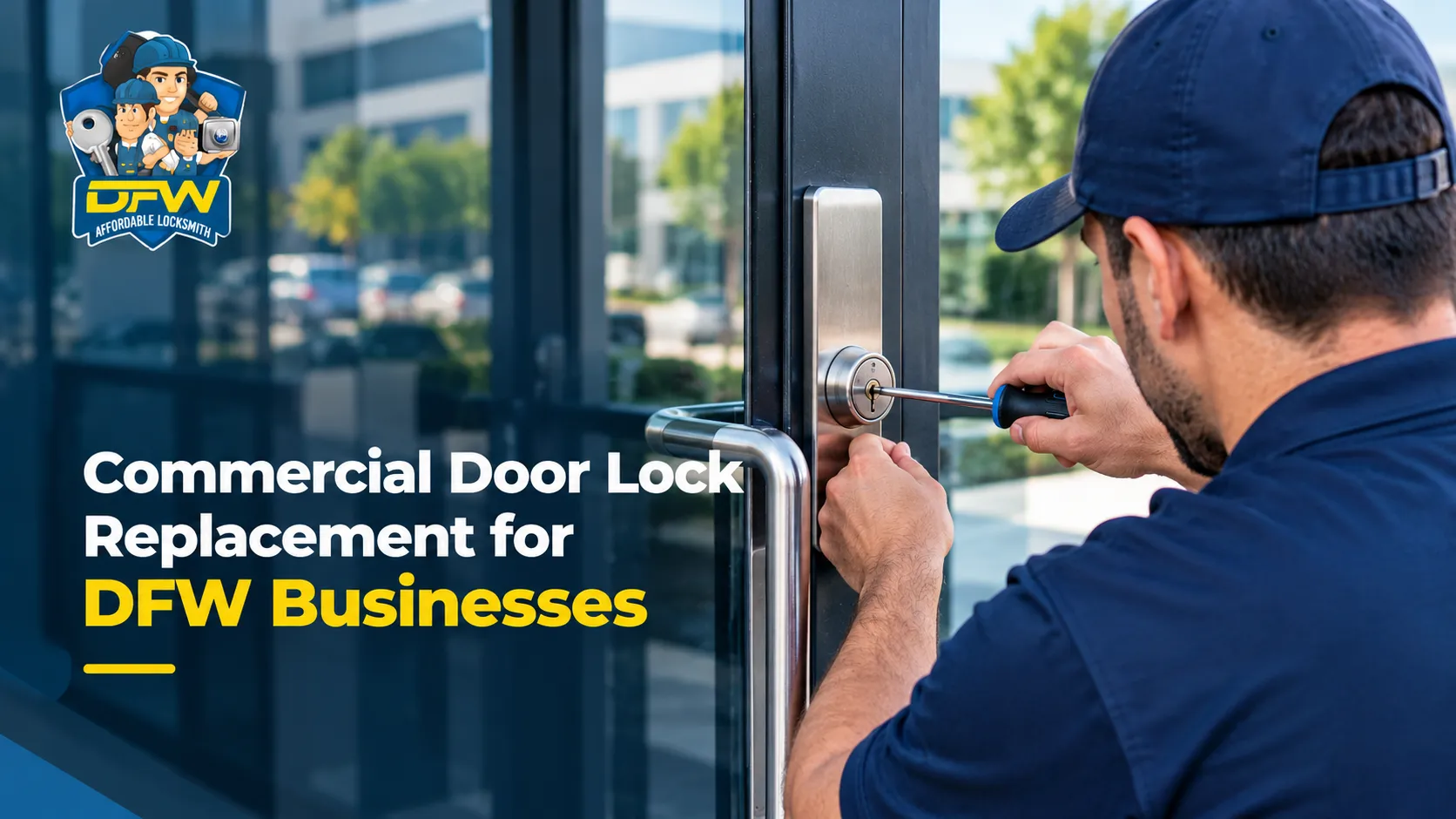
A good changeout starts with a walk-through. The tech measures door thickness, checks the frame material and looks for a fire-rating label. Wrong measurements ruin good hardware, so this step matters more than it looks.
Removal comes next. The tech pulls the old lockset, inspects the latch bore and strike plate, and repairs any damage to the door edge. Worn frames get a steel strike box before the new lock goes in.
The new hardware then gets fitted, aligned and tested through at least 20 cycles. After that, the tech sets up your key system. Many businesses choose a multi-level hierarchy where managers open every door and staff open only their own. Keys get stamped and logged, so you hold a clear record of who has what.
Code is part of the job. The 2010 ADA Standards call for door hardware you can operate with one hand, without tight grasping, pinching or twisting of the wrist, as the ADA design standards for operable door hardware explain. Fire codes in Texas cities build on the International Fire Code, which says exit doors must open from the inside without a key or special knowledge. Dallas, Fort Worth and Plano each add local amendments, and electrified hardware on fire-rated doors can trigger a fire marshal inspection. A licensed tech knows which rules apply to your door before work starts.
After a break-in, emergency commercial door lock replacement usually happens the same day. The tech secures the door first so you can reopen safely, then schedules the full upgrade. If you are locked out right now, emergency locksmith help is the faster route.
What drives the cost of replacing business locks
Commercial door lock replacement cost starts with the grade you pick. In our experience, a Grade 2 lockset runs about $150 to $350 per door installed, and a Grade 1 mortise set runs $250 to $600. Electronic locks climb to $350 to $900. Card reader systems start near $1,200 per door once wiring and software are counted.
Labor in the Dallas and Fort Worth area usually runs $75 to $150 per hour. After-hours and weekend calls often carry a premium. Brands matter as well. Schlage, Medeco, Best, Sargent and Yale all make commercial lines, and prices vary with the keyway system and warranty.
If your hardware is still sound, a commercial lock rekey costs far less. Rekeying runs roughly $20 to $40 per cylinder and cuts off old keys without new locks. A licensed commercial locksmith in the DFW area puts it this way: the lock itself rarely fails first, the cheap strike plate and loose frame do. Is the lowest quote really the lowest if the door fails again next spring?
Ask for an itemized quote that lists parts, labor, trip fees and any code upgrades. Fire-rated doors and ADA fixes add cost, but they also protect you from fines.
How to choose a licensed locksmith for access control systems
Start with the license. Texas regulates locksmith companies through the Department of Public Safety Private Security Program, so ask for the license number and check it. Then ask about liability insurance and bonding. A tech who damages your frame without coverage leaves you with the bill.
Look at specialization. A contractor who works on commercial doors across DFW, like DFW Affordable Locksmith, has handled local fire marshal requirements, knows which finishes hold up in Texas heat and carries trade-specific insurance that a general handyman often skips. That experience shows up in fewer callbacks and cleaner installs.
Other signs of a solid provider:
- Written quotes with no surprise fees
- Commercial-grade brands, not big-box hardware
- A warranty on both parts and labor
- References from nearby businesses
- Clear answers about access control systems and key tracking
- Round-the-clock availability for urgent calls
Professional commercial door lock replacement should feel organized from the first call. If a provider cannot explain lock grades or code rules in plain words, keep looking. Our commercial locksmith services in DFW page lists what a full-service visit covers.
Conclusion
A solid commercial door lock replacement starts with the right grade for each door, a clear key plan and a licensed installer. Check your oldest, busiest door first, then work inward. If you want a second opinion on your current hardware, reach out to DFW Affordable Locksmith for a free quote, or send your questions through our contact us page. Most businesses find the fix is smaller and quicker than they feared.
Frequently asked questions
How much does commercial door lock replacement cost in Dallas?
Most doors run $150 to $600 installed, depending on grade and brand. Electronic and card reader locks cost more, often $350 to $3,000 per door. Labor, trip fees and after-hours calls change the final total, so get an itemized quote.
How long does it take to replace a commercial door lock?
A standard lockset takes one to two hours per door. Mortise locks and glass doors can take up to three hours. Card reader systems need extra time for wiring and software setup, sometimes a full day for several doors.
Can a locksmith rekey commercial locks instead of replacing them?
Yes, if the hardware is in good shape and still meets code. Rekeying changes the internal pins so old keys stop working. It costs a fraction of replacement, but worn or low-grade locks should be swapped.
Do I need a permit to change locks on a business door in Texas?
Most simple swaps need no permit. Electrified locks, fire-rated doors and exit hardware may need a city inspection or fire marshal approval. Your locksmith should check Dallas, Fort Worth or local rules before starting the job.
What lock grade should a Fort Worth storefront use?
Grade 1 is the safest choice for a busy storefront door. It handles heavy daily use and resists forced entry better than lower grades. Back doors and offices can often use Grade 2 without trouble.