
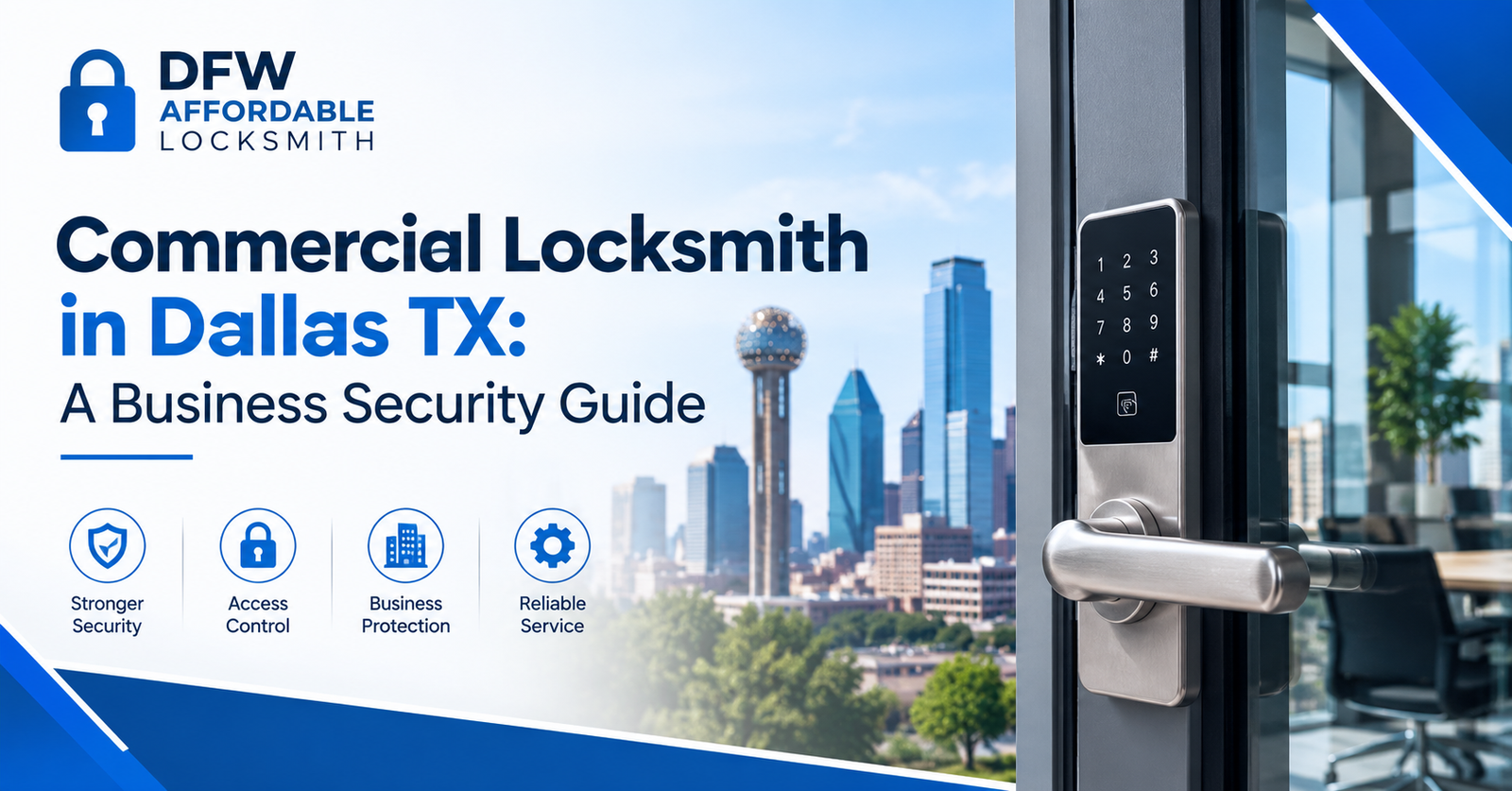

Running a business in Dallas means managing employees, customers, inventory, equipment, and confidential information. While many business owners invest in alarms and cameras, the locks on their doors are just as important. A damaged lock, missing employee key, or poorly managed access system can create security concerns that affect daily operations.
Finding a reliable Commercial Locksmith in Dallas TX, DFW Affordable Locksmith can help business owners address these problems before they turn into larger issues. From rekeying office doors to upgrading commercial hardware and managing employee access, the right locksmith services can support a more secure workplace.
The key is understanding which security measures your business actually needs. A small retail shop, a professional office, and a warehouse will not necessarily require the same locking systems. This guide explains how Dallas businesses can assess their security, identify common lock problems, and decide when professional locksmith assistance makes sense.
Why Commercial Lock Security Matters for Dallas Businesses
Commercial properties often have more access points and different security requirements than residential properties. Employees may enter through separate doors, deliveries may arrive throughout the day, and certain rooms may contain equipment, records, or merchandise that should not be accessible to everyone.
A basic lock setup may be sufficient for a small business with limited access needs. Larger workplaces, however, may benefit from a more structured approach to keys, door hardware, and entry permissions.
Consider these common situations:
- Employee turnover: Former employees may still have keys that provide access to the premises.
- Lost or unreturned keys: Management may not know who can enter the building.
- Damaged commercial locks: A lock that sticks or fails to latch can disrupt operations and compromise security.
- Unrestricted internal access: Staff members may be able to enter storage rooms, offices, or other restricted areas unnecessarily.
- Business expansion: Additional offices, entrances, or departments can make an existing key system difficult to manage.
A professional security assessment can help identify these gaps and determine whether repairs, rekeying, replacement hardware, or electronic access control is the most suitable solution.
When Should a Business Hire a Commercial Locksmith?
Not every security concern requires a complete system upgrade. In many cases, addressing one specific problem can improve access management without replacing every lock in the building.
After an Employee Leaves the Company
Employee departures are a practical reason to review who has keys to the workplace. This is especially important when an employee held a management position, had access to sensitive records, or possessed keys to several rooms.
If keys have not been returned or you cannot confidently account for them, ask a locksmith whether rekeying is appropriate. Rekeying changes the internal configuration of a compatible lock so that previous keys no longer operate it.
The appropriate response depends on the circumstances, the type of lock, and the level of access involved. Businesses should also update electronic credentials when former employees have access through keycards, PINs, or mobile systems.
After Losing a Business Key
A lost key does not automatically mean every lock needs replacement. The decision depends on which doors the key opens, whether it identifies the business, and the likelihood that someone unauthorized could use it.
For example, losing a key that opens only a low-risk storage cabinet presents a different concern from losing a master key that opens multiple offices.
A commercial locksmith can help assess the affected locks and recommend a proportionate response.
When a Lock Becomes Difficult to Operate
Commercial doors can experience heavy daily use. Worn cylinders, loose hardware, misaligned doors, and damaged latches may eventually make locking and unlocking difficult.
Do not wait until a lock stops functioning completely. A professional inspection can determine whether adjustment, repair, replacement parts, or a new lock is necessary.
When Opening a New Business Location
Moving into a leased office or retail property creates an opportunity to review the existing security arrangements. Previous occupants, contractors, and property managers may have had different levels of access.
Before opening, confirm which keys and credentials are active, who controls the existing access system, and whether any locks require rekeying or replacement.
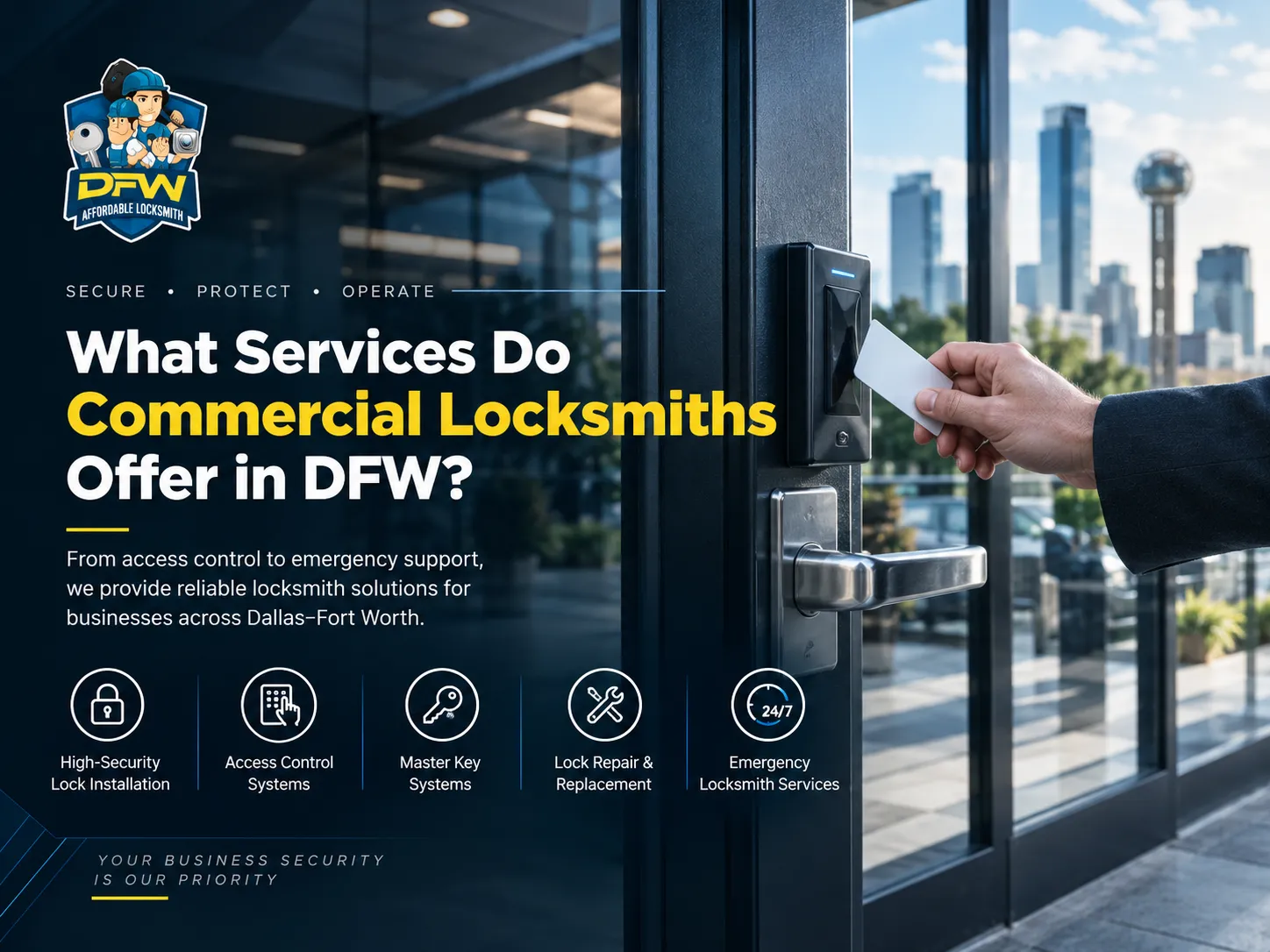
Commercial Locksmith Services That Help Protect Business Property
The right service depends on the building, the type of business, and how employees use each entrance.
Commercial Lock Installation and Replacement
Commercial locks should be suitable for the door, expected traffic, and security requirements of the premises. A storefront, an office entrance, and an internal records room may need different hardware.
A locksmith can assess the existing setup and recommend suitable locking mechanisms. When comparing options, consider durability, compatibility, maintenance, and the level of security required rather than choosing solely by price.
Commercial Rekeying
Rekeying is often worth considering when a business needs to change who can use its existing locks without replacing the entire lock hardware.
It may be useful after staff changes, a lost key, or a change in property occupancy. However, not every lock can be rekeyed in the same way, and the condition of the existing hardware matters.
For businesses with several doors, ask for a clear explanation of which locks will be rekeyed and how the new keys will be organized.
Master Key Systems
A master key system can simplify access management for businesses with several rooms or departments.
For instance, an employee may receive a key that opens their assigned office, while an authorized manager has a key that opens several designated areas. The system can reduce the number of keys certain staff members need to carry.
The key hierarchy should be planned carefully. Too many people having broad access can undermine the purpose of the system, so access levels should reflect actual job responsibilities.
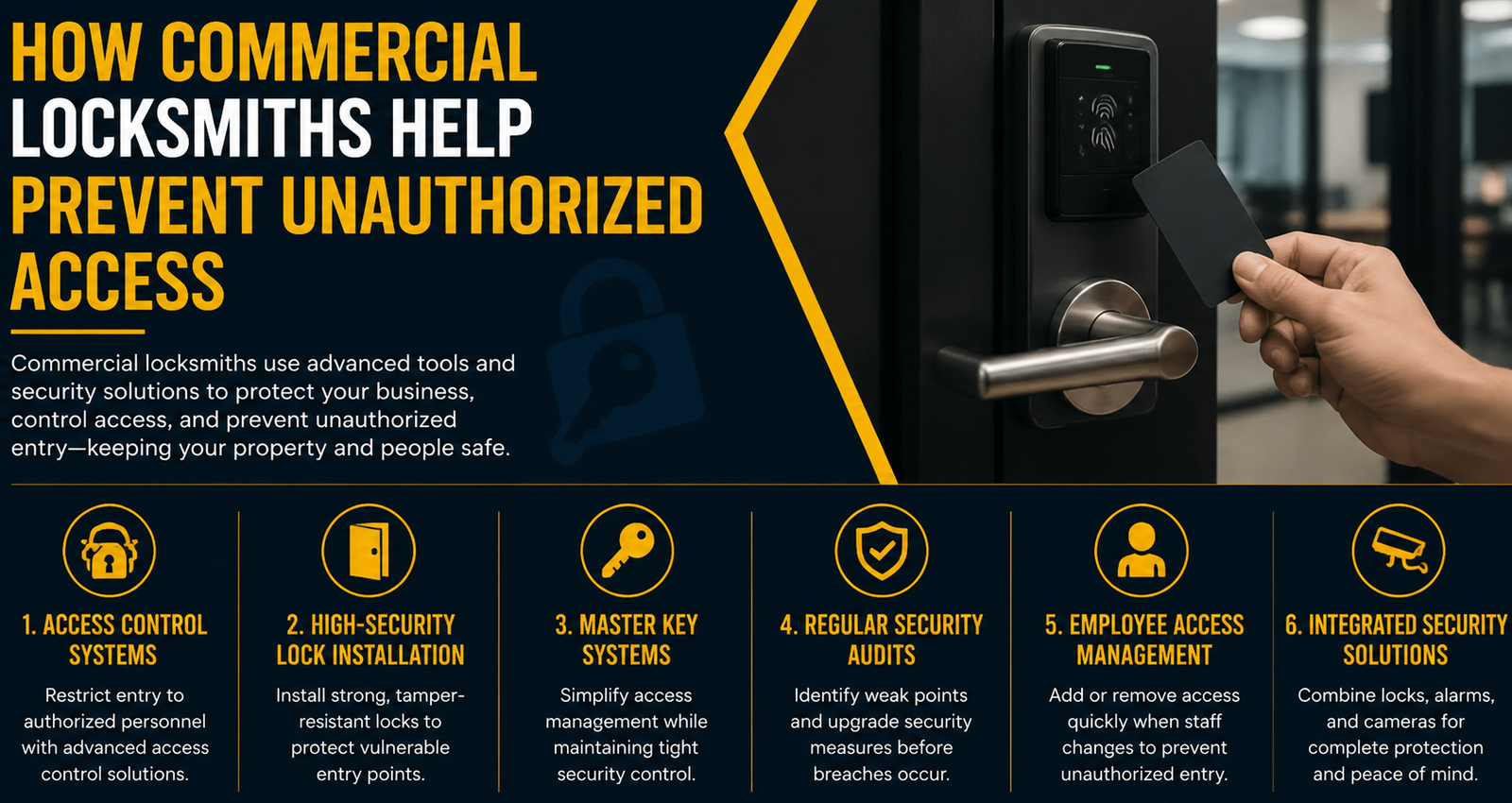
Electronic Access Control
Electronic access control can use keycards, fobs, PIN codes, or compatible mobile credentials to manage entry.
These systems may be useful for businesses that regularly add or remove employees, restrict access to certain rooms, or need more centralized control over multiple entrances.
Before installing a system, consider who will administer it, how credentials will be deactivated, whether the existing doors support the required hardware, and what happens during a power or network outage.
Electronic systems are not automatically the best choice for every business. A well-maintained mechanical locking system may be sufficient for a small property with straightforward access needs.
Commercial Lockouts and Emergency Repairs
A lockout can delay employees, interrupt customer service, and prevent access to essential equipment or records.
A commercial locksmith can assess the situation and help restore authorized access. If a lock has failed or a key has broken inside it, the appropriate solution will depend on the lock mechanism and the condition of the door.
When contacting a locksmith, explain the type of property, the affected entrance, and whether the issue involves a lockout, damaged hardware, or a failed electronic system. This helps the provider understand the job before arriving.
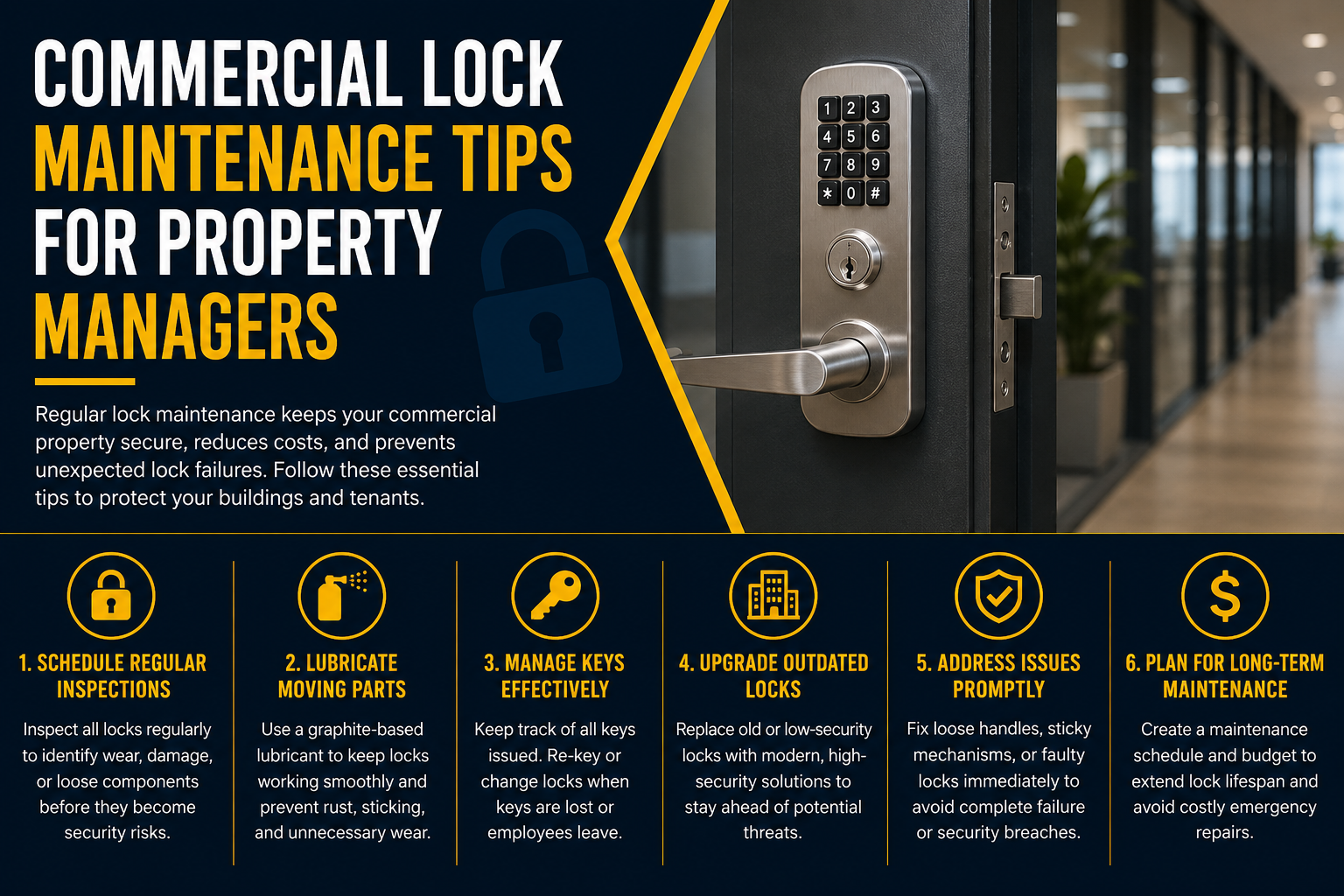
How to Review Your Business Security Before Problems Occur
A periodic security review can help identify issues that are easy to overlook during everyday operations. You do not need to start by replacing every lock. Begin with a clear inventory of your entrances and access requirements.
Check Every Exterior Entrance
Inspect the main entrance, rear doors, side entrances, delivery doors, and any other route into the property.
Confirm that doors close properly, locks engage correctly, and authorized employees know how to secure the premises at closing time. If a door does not latch consistently, determine whether the issue involves the lock, the door alignment, or other hardware.
Identify Restricted Areas
List the rooms or storage areas that should have limited access. Depending on the business, these might include offices containing confidential records, inventory rooms, equipment areas, or management offices.
Compare that list with the permissions provided by your current keys or electronic credentials. Remove unnecessary access where appropriate.
Review Key and Credential Management
Maintain a record of issued keys and electronic credentials. Establish a process for returning keys when employees leave and removing electronic permissions promptly.
For master key systems, keep track of who holds keys with broader access. Lost master keys may require a more extensive review than lost keys that operate only one door.
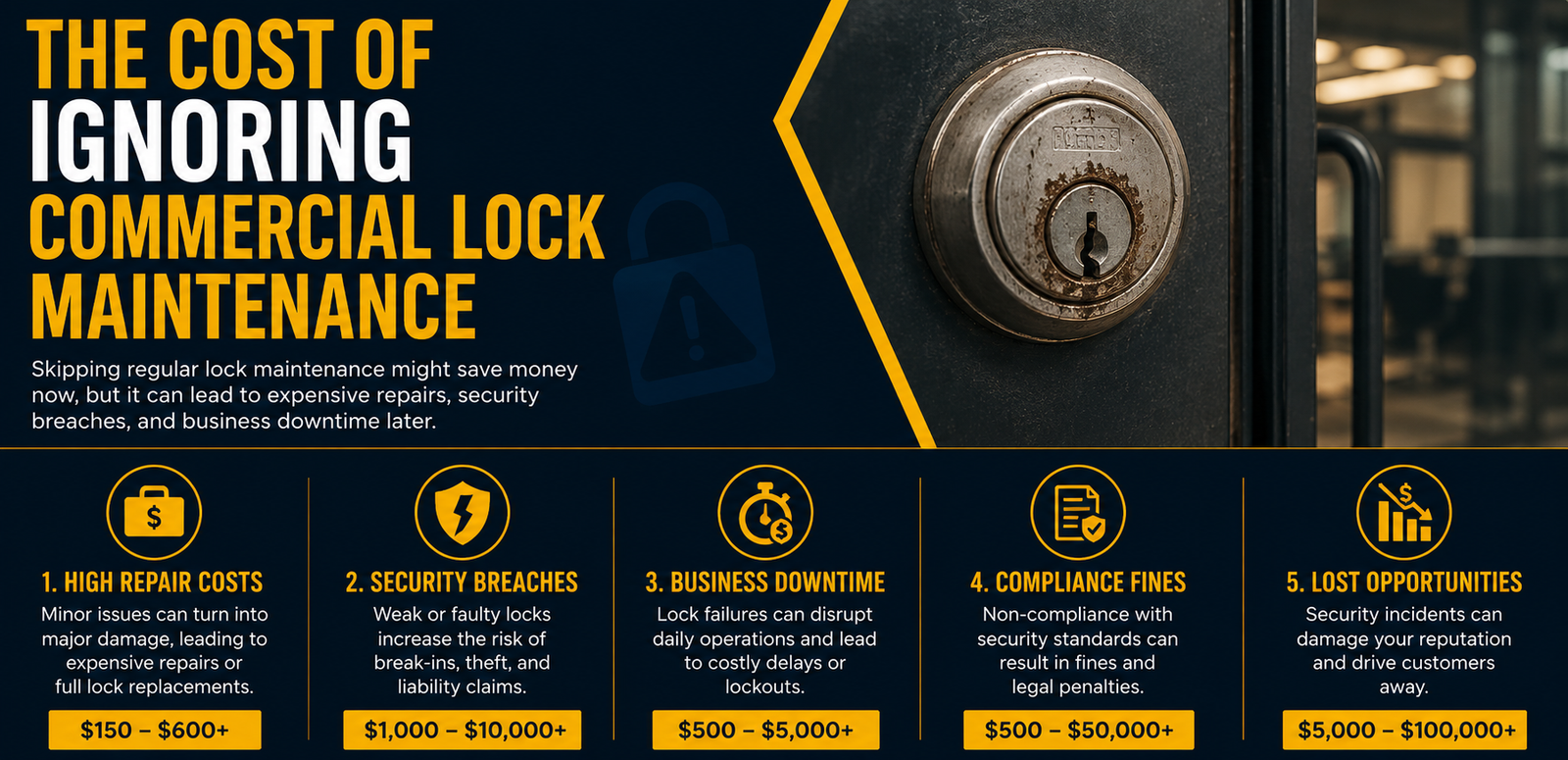
Address Repairs Promptly
Loose handles, damaged cylinders, failing closers, and doors that do not lock reliably should be evaluated rather than ignored.
If your business operates in a multi-tenant building, coordinate with property management before changing shared entrances or common-area hardware. This helps prevent conflicts with building access arrangements.
How to Choose a Commercial Locksmith in Dallas TX
Choosing a locksmith is not simply about finding someone who can open a door. Business owners should consider the provider’s relevant experience, communication, documentation, and ability to work with their existing hardware.
Look for Relevant Commercial Experience
Ask whether the locksmith handles the type of property and hardware involved in your project. Installing a lock on a frequently used commercial entrance may involve different considerations from servicing a standard residential door.
If you need an access control system or a master key arrangement, confirm that the provider has experience with that specific type of work.
Request a Clear Estimate
Before authorizing non-emergency work, ask for a written estimate that describes the expected service, parts, labor, and any additional charges that may apply.
For larger projects, confirm which doors and hardware are included. If unexpected damage is discovered during the work, ask how additional repairs will be approved and priced.
Ask About Licensing and Insurance
Texas has licensing requirements that apply to locksmith businesses and certain security services. Ask the provider for the applicable credentials and verify them through the appropriate state authority when relevant to the work.
Insurance and clear business documentation also matter when a contractor will be working on your commercial property.
Discuss Scheduling and Business Disruption
A locksmith working at a retail entrance, office, or warehouse may need to coordinate around operating hours and staff movements.
Explain any scheduling restrictions before the appointment. For larger projects, agree on which entrances will be unavailable and how authorized access will be maintained during the work.
Review Warranty and Follow-Up Support
Ask what warranty applies to the hardware and whether labor or workmanship is covered separately. Find out whom to contact if a newly installed lock needs adjustment or an electronic credential stops working.
Clear answers help you compare providers on more than the initial quote.
Why Dallas Businesses Should Plan Security Around Their Actual Needs
There is no single locking system that works best for every commercial property. A small office may need reliable locks and a straightforward key-control process, while a larger facility may require different access levels across multiple entrances.
The most practical approach is to identify your risks, review how people use the building, and select services that address specific problems. Rekeying can be appropriate after a key-control issue, lock repair can resolve a mechanical problem, and access control may offer more flexibility when staff access changes frequently.
Business owners should also consider fire safety and emergency exit requirements when changing door hardware. Any security upgrade must remain compatible with applicable building and fire codes.
For official information about locksmith licensing in Texas, consult the Texas Department of Public Safety’s Private Security Program.
Secure Your Workplace With Professional Commercial Locksmith Services
Reliable commercial locks and well-managed access can help businesses protect their premises while keeping everyday operations organized. The right solution starts with understanding the doors, people, and access requirements involved.
DFW Affordable Locksmith provides commercial locksmith services for businesses across the Dallas–Fort Worth area, including lock installation, rekeying, master key systems, and other commercial security solutions.
If your business has experienced employee turnover, lost keys, damaged locks, or changes in its security requirements, consider arranging an assessment before the problem disrupts your operations.
Explore commercial locksmith services in DFW to learn more about the available services, or contact DFW Affordable Locksmith to discuss your business’s needs.
A clear plan, suitable hardware, and responsible key management can help you maintain better control over who enters your workplace.