

Running a business means protecting more than equipment and inventory. Your employees, customers, confidential information, and daily operations all depend on a secure and accessible workplace.
When you need business locksmith services in DFW, choosing the right commercial security solutions can help you manage entry, protect valuable assets, and maintain control over who can access different areas of your property.
Whether you operate an office, retail store, warehouse, restaurant, or multi-unit commercial property, your locking systems should support the way your business operates.
DFW Affordable Locksmith provides a starting point for exploring commercial locksmith solutions and identifying options that may suit your property’s security requirements.
Why Commercial Locksmith Services Matter for Businesses
Commercial properties often have more complex access requirements than residential buildings.
Employees may need access to certain rooms, managers may require additional permissions, and restricted areas may need stronger security measures.
A well-planned commercial locking system helps address these different needs.
Protect Business Assets and Equipment
Businesses may store computers, tools, merchandise, documents, and other valuable items.
Appropriate locks and access arrangements can help limit unauthorized entry and reduce opportunities for theft.
The right security approach depends on the type of property, the value of the assets, and the risks associated with individual areas.
Manage Employee Access
Employee responsibilities can change over time.
New employees may need access to certain spaces, while departing employees may no longer require access to the building.
Commercial locksmith solutions can help businesses update access permissions through rekeying, lock replacement, or electronic access systems.
Support Daily Business Operations
Security should not make ordinary business activities unnecessarily difficult.
Employees need convenient access to authorized areas, while customers and visitors should be able to enter designated spaces without compromising restricted areas.
A properly planned locking system balances security with practical everyday use.
Commercial Locksmith Services for Different Business Needs
Every business has different security priorities. A small office may need reliable entry locks, while a warehouse may require several access points and restricted storage areas.
Understanding the available services can help you identify the right solution.
Commercial Lock Installation and Replacement
Commercial locks are designed to accommodate different levels of use, security, and access requirements.
Installing or replacing locks may be appropriate when opening a new business location, upgrading existing hardware, or addressing damaged equipment.
Choose Locks That Match Your Property
The appropriate lock depends on several factors:
- The type of commercial door
- The frequency of daily use
- The level of security required
- The building’s existing hardware
- Applicable accessibility and safety requirements
A lock suitable for a private office may not be appropriate for a high-traffic entrance or a restricted storage area.
Replace Damaged or Outdated Hardware
A commercial lock that sticks, fails to latch, or becomes difficult to operate may affect both security and convenience.
Depending on the condition of the hardware, repairs or replacement may be necessary.
Addressing these issues early can help prevent access problems from disrupting business operations.
Master Key Systems for Better Access Management
Managing multiple keys can become complicated when a business has several rooms, departments, or restricted areas.
A master key system offers a structured way to organize access.
How a Master Key System Works
A master key system uses specially configured locks that can be operated by different levels of keys.
For example:
- An employee key may open one designated office.
- A department key may open several related rooms.
- A manager’s key may provide access to additional areas.
- A master key may operate multiple locks within the system.
The exact arrangement depends on the business’s requirements and the system’s design.
When Should a Business Consider Master Keying?
Master key systems may be useful for:
- Office buildings with multiple departments
- Retail businesses with restricted storage areas
- Property managers overseeing several units
- Warehouses with separate inventory sections
- Businesses that need different employee access levels
A carefully planned system can simplify key management while maintaining appropriate restrictions.
Commercial Rekeying for Changing Security Needs
Rekeying changes the internal configuration of a compatible lock so that previous keys no longer operate it.
This can be particularly useful when a business needs to update access without replacing all existing hardware.
Situations That May Require Rekeying
A business may consider rekeying when:
- An employee with key access leaves the company.
- A key is lost or cannot be accounted for.
- A property changes ownership or management.
- Access arrangements need to be reorganized.
- The business wants to reduce the number of active keys.
Whether rekeying is suitable depends on the existing lock condition and the required security changes.
Rekeying or Replacing Commercial Locks?
Rekeying may be appropriate when the existing hardware is functional and compatible with the desired access arrangement.
Replacement may be more suitable when locks are damaged, outdated, or unable to meet current security requirements.
Evaluating both options can help businesses make a practical decision.
Electronic Access Control for Modern Workplaces
Some businesses need more flexibility than traditional keys can provide.
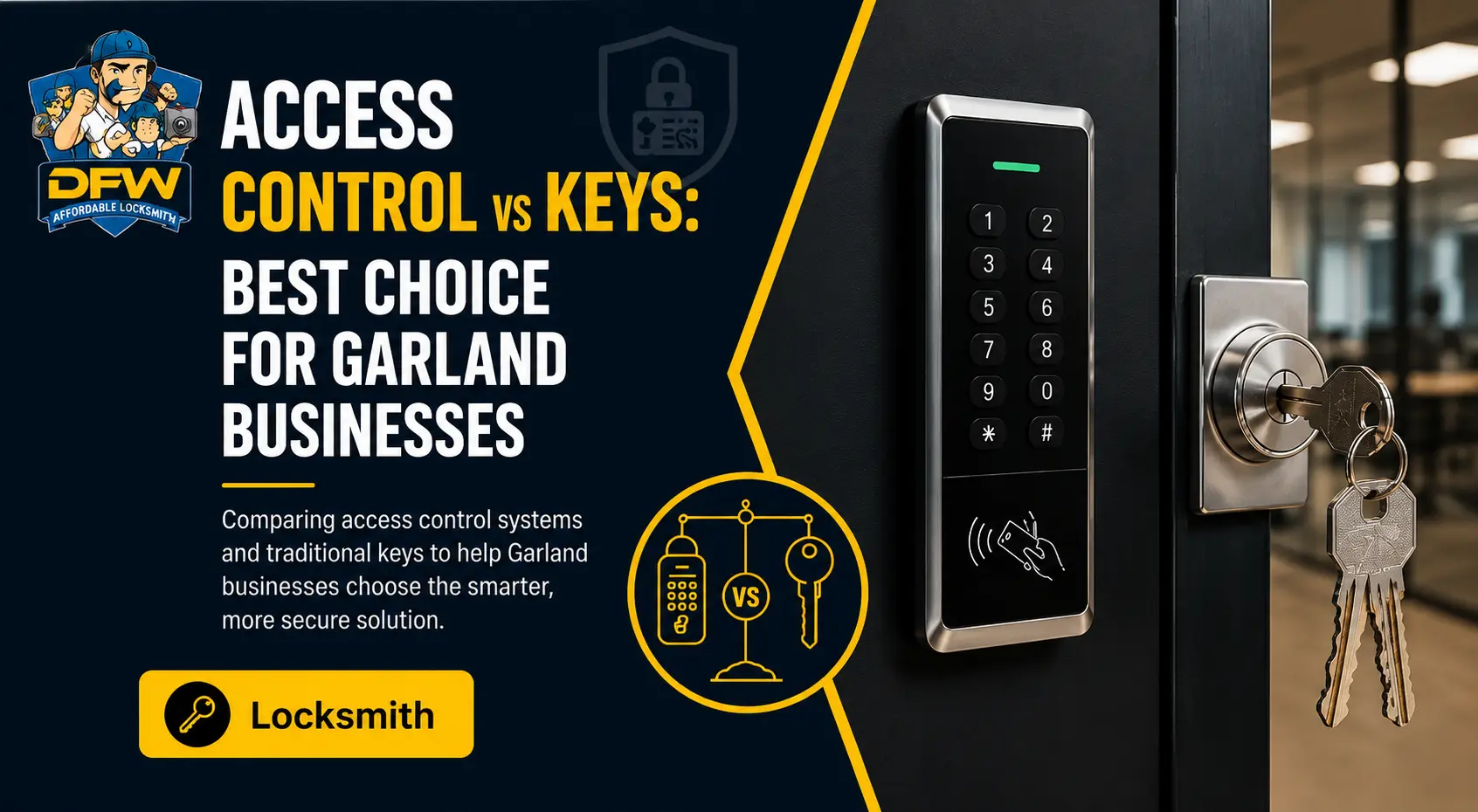
Electronic access control systems can help manage entry through keypads, electronic credentials, or other authorized access methods.
Keypad Entry Systems
Keypad locks allow authorized users to enter a code instead of carrying a traditional key.
Depending on the system, businesses may be able to assign different codes to different users or change access codes when necessary.
This can be useful for offices, storage areas, and other locations where controlled entry is important.
Electronic Credentials and Access Permissions
Some access control systems use electronic credentials to manage entry.
Depending on the system’s capabilities, administrators may be able to assign, modify, or deactivate credentials without changing the physical lock.
This can simplify access management for businesses with multiple employees or locations.
Considerations Before Installing Electronic Locks
Before choosing an electronic system, evaluate:
- The number of authorized users
- The types of doors involved
- Power and backup requirements
- The process for adding or removing users
- System maintenance needs
- Compatibility with existing security equipment
Electronic access control should also be evaluated alongside emergency egress and applicable building requirements.
Door Closers, Exit Devices, and Commercial Door Hardware
Commercial security involves more than the lock itself.
Door hardware plays an important role in controlling access, supporting safe movement, and maintaining proper door operation.
Door Closers
Door closers help control how a door closes after being opened.
Depending on the door and its use, suitable closers can help prevent doors from remaining unintentionally open and support consistent operation.
Exit Devices and Panic Hardware
Certain commercial buildings require specific exit hardware to support safe evacuation.
The appropriate hardware depends on the building’s occupancy, door configuration, and applicable fire and life safety requirements.
When evaluating commercial locks, businesses should ensure that security improvements do not interfere with required emergency exit functions.
Commercial Door Alignment
A door that does not align properly may affect the operation of its locking hardware.
Possible causes include loose hinges, changes in the door frame, or worn components.
Correctly addressing the underlying issue can help restore reliable operation.
Locksmith Solutions for Different Industries Across DFW
The Dallas–Fort Worth business community includes a wide range of commercial properties, each with its own security considerations.
Offices and Professional Workspaces
Office environments may require controlled access to private offices, meeting rooms, document storage, and employee-only areas.
Master key systems or electronic access control may help organize these permissions.
Retail Stores
Retail businesses need to balance customer access with security for merchandise, cash handling areas, and storage rooms.
Appropriate locks and access arrangements can help separate public areas from restricted spaces.
Warehouses and Distribution Facilities
Warehouses often have multiple entry points, storage sections, and operational areas.
Security planning may involve commercial locks, restricted access arrangements, and hardware suitable for frequent use.
Restaurants and Hospitality Businesses
Restaurants and hospitality properties may need different access levels for public areas, kitchens, storage rooms, offices, and employee entrances.
A practical locking system should support daily operations while protecting restricted spaces.
Property Management Companies
Property managers may oversee multiple commercial units or buildings.
Consistent key management and organized access arrangements can help simplify security administration across properties.
How to Choose a Commercial Locksmith in DFW
Selecting a commercial locksmith involves more than finding someone who can install a lock.
The provider should understand your property’s requirements and be able to explain the available options.
Look for Relevant Commercial Experience
Commercial locking systems can involve specialized hardware and access requirements.
Ask whether the provider has experience with the type of property, lock, or security system involved in your project.
Request a Clear Scope of Work
Before authorizing service, confirm which locks or doors will be addressed and what work is included.
A clear scope helps prevent misunderstandings and makes it easier to evaluate the proposed solution.
Ask About Hardware Compatibility
Not every lock or access control system works with every commercial door.
Discuss compatibility, installation requirements, and any modifications that may be necessary.
Confirm Pricing Before Work Begins
Commercial locksmith costs depend on the type of service, hardware, labor, and complexity of the project.
Ask for a clear explanation of the expected charges, including any replacement parts or additional work that may be required.
Discuss Access and Safety Requirements
Security improvements should account for employee access, accessibility, and emergency exit requirements.
Before installing new hardware, confirm that the proposed solution is appropriate for the building and its intended use.
What Influences the Cost of Business Locksmith Services in DFW?
Commercial locksmith pricing varies according to the property’s security needs and the work involved.
Type and Quantity of Locks
Installing or rekeying one lock involves a different scope from updating multiple doors throughout a commercial building.
The number of locks and their specifications can influence labor and material requirements.
Complexity of the Security System
Traditional mechanical locks, master key systems, electronic locks, and access control systems have different installation and configuration requirements.
More complex systems may involve additional planning, equipment, or programming.
Condition of Existing Doors and Hardware
Damaged doors, misaligned frames, or incompatible hardware may require additional work before a new locking system can be installed.
Project Scheduling
The timing of the work may affect costs, particularly when a business requests service outside standard operating hours.
Discuss scheduling and any applicable additional charges before confirming the work.
How Can Your Business Prepare for a Locksmith Consultation?
A little preparation can help make a commercial locksmith consultation more productive.
Start by identifying the security concerns you want to address.
For example, you may want to reduce the number of keys in circulation, restrict access to a storage room, replace damaged locks, or introduce electronic entry.
Next, consider the following information:
- The type of business property
- The number and location of doors
- The existing lock and hardware types
- The number of employees requiring access
- Any restricted areas
- Your preferred security approach
- Your general project budget
If you manage multiple locations, consider whether a consistent access management approach would be useful across the properties.
This information can help clarify your needs and make it easier to evaluate possible solutions.
Why Consider DFW Affordable Locksmith for Commercial Security?
Commercial locksmith decisions should be based on the needs of the business, the condition of the property, and the type of access management required.
DFW Affordable Locksmith is a resource for businesses exploring commercial lock and security solutions.
When considering a locksmith for your property, discuss the specific problem, ask about compatible hardware, and review the proposed work before making a decision.
You can visit DFW Affordable Locksmith to explore available services and determine which commercial locksmith options may suit your business.
Ready to Improve Your Business Security Across DFW?
Whether you’re managing a small office, retail location, warehouse, or commercial property, the right locking system can help you maintain control over access while supporting everyday operations.
Start by identifying which areas need additional protection, how employees should access the property, and whether your current locks meet your requirements.
What commercial security challenge would you like to address first? Visit DFW Affordable Locksmith to explore your options and take the next step toward planning a suitable locksmith solution for your business.
Frequently Asked Questions
1. What do business locksmith services in DFW include?
Commercial locksmith services may include lock installation, lock replacement, rekeying, master key systems, commercial door hardware, electronic locks, and access control solutions. The appropriate services depend on the property’s security requirements.
2. Can a commercial locksmith create a master key system for my business?
A qualified commercial locksmith may be able to configure a master key system for compatible locks. The system can provide different access levels for employees, managers, and other authorized users, depending on the design.
3. Is rekeying a good option when an employee leaves a business?
Rekeying may be appropriate when a departing employee had access to physical keys and the business wants to prevent those keys from operating the locks. The best approach depends on the existing hardware and the property’s access requirements.
4. Are electronic access control systems suitable for small businesses?
Electronic access control may be suitable for businesses of different sizes. The decision depends on the number of users, security requirements, installation costs, and ongoing maintenance needs.
5. How can I improve commercial building security without replacing every lock?
Depending on the existing hardware, options may include rekeying, reorganizing a master key system, upgrading selected locks, or introducing access control for specific areas. A review of the property’s current security arrangements can help identify suitable improvements.