

You signed the lease, picked the paint, and ordered the desks, but did anyone count the keys? Local providers like DFW Affordable Locksmith see this gap across Dallas and Fort Worth often. The landlord hands over a ring of keys and says that should cover it, but former tenants, contractors, and cleaners may still hold copies. Nobody can say how many.
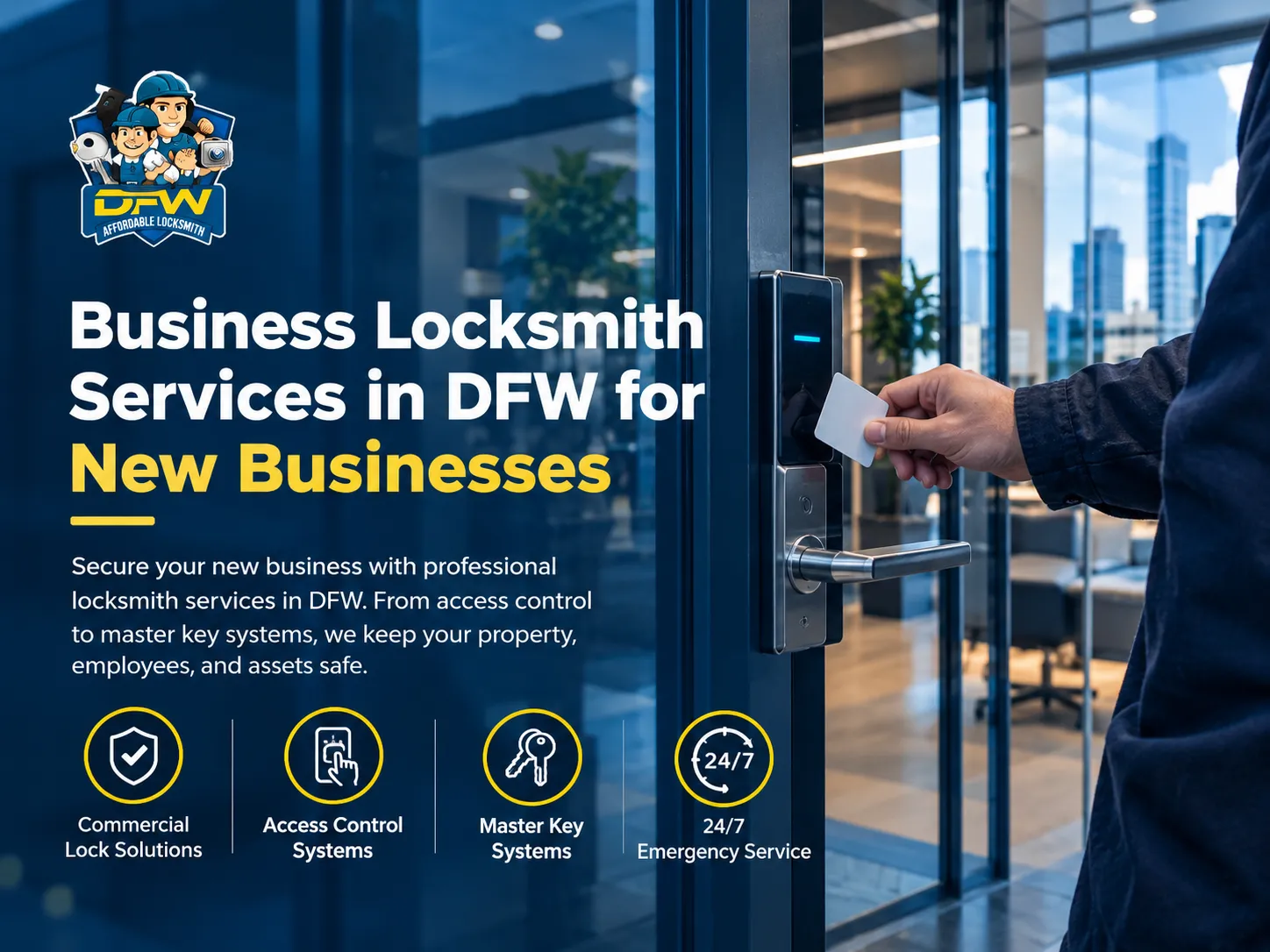
Reliable business locksmith services in DFW for new businesses close that gap before your first customer walks in. A locksmith resets who holds keys, upgrades weak hardware, and checks that exit doors meet safety rules. In this article, we cover your options, the step-by-step process, typical costs, and how to hire a licensed local pro. Ready to lock down your new space the right way?
Use the sections below as a checklist on your first walk-through. Start at the front door and work toward the back.
Why new DFW companies need a commercial locksmith
Opening day gets the attention, but the quiet risk sits inside your door cylinders. Every key that came with the space is a question mark. A commercial locksmith answers it by rekeying locks, upgrading hardware, and setting up a key system that fits your team.
Why hire someone local? Dallas and Fort Worth span dozens of cities, and each has its own permit office and fire marshal. A locksmith for a new business in Dallas who works across Plano, Irving, and Arlington knows how those offices differ. Professional business locksmith services in DFW for new businesses cover those local rules, from Deep Ellum storefronts to Las Colinas offices.
The numbers show why this matters. The FBI burglary data on forced and unforced entry (2019) shows that 55.7 percent of burglaries involved forcible entry. Another 37.8 percent were unlawful entries with no force. That often points to a door or window left unsecured. Homes took 62.8 percent of cases, so more than a third hit non-residential property such as shops and offices.
Your lease adds a legal angle. Dallas requires a certificate of occupancy before most commercial spaces can open, and a door that traps people inside is a problem on any inspection.
Commercial lock rekeying, master keys, and access control
Four options cover most new offices, shops, and warehouses, and the right pick depends on your door count and how many people need keys.
Commercial lock rekeying is the usual starting point. A locksmith changes the pins inside your existing cylinders, so old keys stop working and new ones take over. It costs far less than new hardware and takes minutes per door. The catch is that rekeying cannot fix a worn or weak lock.
A master key system for small business owners with several doors adds levels of access. One top key opens every lock, and staff keys open only their own rooms.
Master keying adds extra shear points to each lock. As how master key hierarchies work in pin tumbler locks shows, researchers have found weak spots that single-key locks avoid. If a master key goes missing, rekey the whole system right away. Restricted keyways and tight key records lower the risk.
Keypad and smart locks remove physical keys from staff doors. They suit shared suites and busy restaurants in places like Deep Ellum, since you can delete a code in seconds. Texas cold snaps, like the February 2021 freeze, can drain lock batteries fast, so plan for backup power.
Access control systems use cards, fobs, or phone credentials and log every entry. They fit clinics, gyms, and multi-tenant offices where you need to know who came in and when. Texas DPS regulates both locksmiths and electronic access control installers, so check your installer’s license.
Underneath all four sits the lock itself. On exterior doors, look for high-security commercial locks rated ANSI/BHMA Grade 1, the top tier of the commercial grading system.
Here is how the four options compare. Prices are typical DFW ranges and vary by door and brand.
| Option | Typical cost per door | Best for | Upkeep |
| Rekeying | $15 to $40 per cylinder | Small offices, fast key resets | Low |
| Master key system | $30 to $75 extra per door | Multi-door offices, warehouses | Key records, audits |
| Keypad or smart lock | $250 to $600 installed | Staff doors, shared suites | Batteries, code changes |
| Card or fob access control | $1,000 to $3,000 installed | Clinics, gyms, multi-tenant buildings | Software, credentials |
How a locksmith secures a new commercial space
The first visit is mostly a walk-through. The locksmith checks every door, frame, and window latch before touching a tool, then walks you through the plan. Here is the usual order of work:
- Survey: the locksmith inspects each door, frame, and lock for wear, grade, and fit.
- Key audit: you list everyone who holds keys, including the landlord and past tenants.
- Plan: you choose rekeying, a master key system, or access control based on the survey.
- Install: the locksmith rekeys or replaces cylinders and fits exit hardware where needed.
- Test: every key, latch, and closer gets tested, and exit doors must open from inside without a key.
- Record: you receive a key chart and a signed list of who holds which key.
Step five matters for safety as much as security. The OSHA rules for opening exit doors from the inside say workers must be able to open an exit door from the inside at all times, with no key, tool, or special know-how. A panic bar that locks only from the outside is allowed on exit discharge doors.
Accessibility and fire codes add two more checks. Federal ADA standards call for door hardware that works with one hand and no tight grasping, which is why levers replace round knobs in most public areas. Your local fire marshal has the final word on panic hardware, so ask before you buy.
Here is a typical case. A dental practice leased a former retail suite near Legacy West. The owner booked a business lock change in Plano, TX before moving in, because the previous tenant never returned all its keys. The locksmith rekeyed every door, replaced a worn rear deadbolt, and handed over a key chart. The job took one afternoon.
A licensed commercial locksmith in Dallas would give the same advice: rekey on day one, even when the key count looks right.
Typical costs across Dallas and Fort Worth
Price is the first question most owners ask. So how much does a commercial locksmith cost? It depends on door count, hardware grade, and timing more than anything else.
Rekeying is the budget route. Expect roughly $15 to $40 per cylinder, plus a service fee for the trip. An office rekey in Irving, Texas with ten doors can often finish in one visit. Full replacement runs higher, usually $150 to $350 per door for Grade 1 hardware, and exit devices often land between $350 and $900 each. These are typical ranges, and your quote will vary.
A few things move the final number. Door count comes first. After that, lock grade, door and frame condition, and the hour of the call all add up, because after-hours visits cost more and warped frames need repair before new hardware fits. Permits for exit devices or access control can add fees too.
Affordable business locksmith services in DFW for new businesses start with a written quote that lists parts, labor, and trip fees on separate lines. Ask for it before any work begins. Weather adds to the long-term cost, since heat and cold wear on exterior hardware and batteries, so budget a yearly check on keypad locks and door closers.
How to choose business locksmith services in DFW
Anyone can print a business card and call themselves a locksmith. Texas takes a firmer line. The state regulates locksmiths through the DPS Private Security Program for locksmith licensing under Chapter 1702 of the Occupations Code. Ask for both the company license number and the technician’s individual license, then check them in the DPS online search.
Licensed business locksmith services in DFW for new businesses come with paperwork you can verify. Use these questions on your first call:
- What are your DPS license numbers for the company and the technician?
- Can you email proof of general liability insurance?
- Will you send a written quote with parts, labor, and trip fees listed?
- How fast can you reach my address, including after hours?
- Do you keep a key chart for my building, and who can see it?
- What warranty covers the hardware and the labor?
Specialists have an edge over a general handyman or a national call center. A contractor who works on commercial locks across Dallas and Fort Worth, like DFW Affordable Locksmith, deals with local permit questions often, sees how hardware holds up in Texas heat, and typically carries locksmith-specific licensing and insurance that handymen may skip.
Location matters too. A storefront locksmith in Arlington, TX or an Irving office specialist should state which cities they cover and quote an arrival window. Providers that hide their address or use a vague company name deserve a second look.
Conclusion
A new lease brings a long to-do list, and locks are easy to push down it. Rekey first, match hardware to how your team works, and keep a written record of every key. Local business locksmith services in DFW for new businesses can often cover all three in a visit or two.
Your next step is simple. Walk your space, list every door, and count the keys you hold today. Then reach out to DFW Affordable Locksmith for a quote on rekeying or hardware upgrades, and ask what fits your layout and budget. A short call can show which doors need attention first and which can wait. Take the time you need, because a secure opening day comes from a few small, steady decisions.
Frequently asked questions
What does a commercial locksmith do for a new business?
A commercial locksmith rekeys or replaces locks, fits exit hardware, builds master key systems, and installs access control. Most also create a key chart that records who holds which key. A short walk-through shows which of those jobs your space needs.
Should I rekey locks for a new office or replace them?
Rekey when your hardware is solid and rated for commercial use. Replace locks that are worn, loose, or residential grade. A quick survey settles it. Rekeying costs less, but it cannot repair a failing latch or a bent strike plate, so many owners rekey some doors and replace others.
How much does commercial lock rekeying cost in Fort Worth?
Most Fort Worth jobs run about $15 to $40 per cylinder, plus a trip fee. Larger jobs often earn a better per-door rate. Master keyed systems and restricted keys cost more. Ask for a written quote that splits parts, labor, and travel.
How much does an access control system cost for a small office?
Card or fob systems often run $1,000 to $3,000 per door, including the reader, controller, and installation. Cloud-based platforms may add a monthly fee. Ask every vendor for a quote that lists hardware, labor, and recurring charges so you can compare them fairly.
Do emergency business locksmith services in DFW for new businesses cover after-hours lockouts?
Many providers take after-hours calls, though night and weekend fees run higher. Confirm hours, service areas, and surcharges before you need help. Save the number in your phone and share it with your manager, so a lockout never waits on a search.