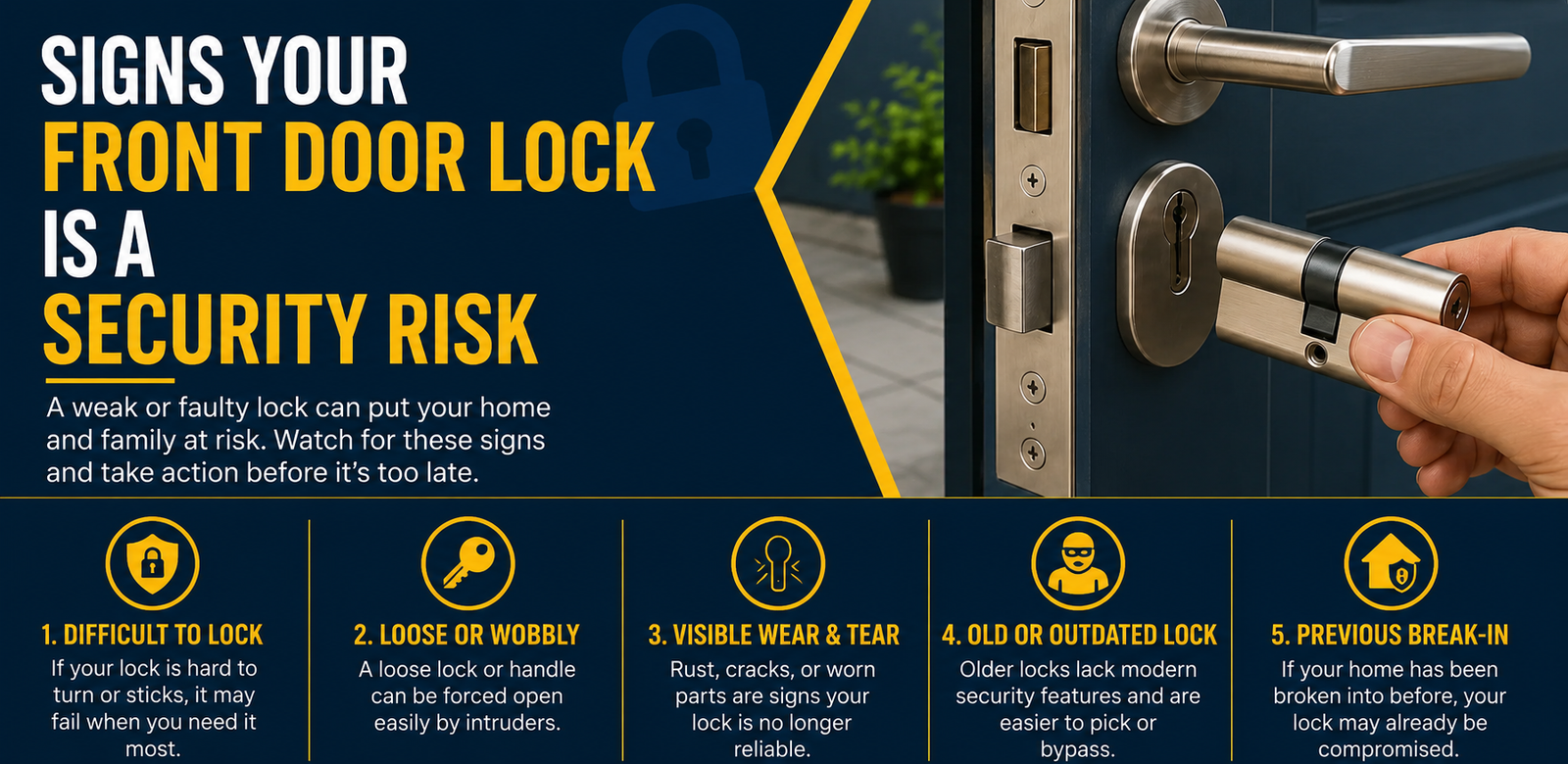

Your front door lock is the most important piece of door hardware on your property. It’s the first physical barrier between your family, your belongings, and anyone who might want access without permission. But locks are mechanical devices. They wear out. They corrode. They get damaged. And in many cases, homeowners don’t realize their entry door security has been quietly failing for months until something goes wrong.
Understanding the early warning signs of a compromised door lock system is not about paranoia. It’s about being informed. Whether you’re thinking about front door lock replacement, considering a smart front door lock upgrade, or just trying to figure out if that sticky deadbolt is a real problem, this article gives you the answers you need with the practical guidance that comes from years of residential locksmith experience across the Dallas–Fort Worth area.
If you’ve ever wondered why some homes are targeted and others aren’t, part of the answer is almost always found at the front door. Burglars are opportunists. A lock that shows visible weakness whether through worn finish, loose hardware, or sluggish operation sends a signal. Don’t let yours be that signal.
What Causes a Front Door Lock to Fail or Weaken Over Time?
Locks don’t fail overnight. The process is gradual and that’s exactly what makes it dangerous. You keep using the same key, the same door, the same routine while the internal components of your lock mechanism slowly degrade below the threshold of reliable protection. Here’s what drives that process:
- Age and general wear. The internal pins inside your lock cylinder are precision components. Over years of daily use, those pins wear down, develop play, and stop engaging correctly. The result is a lock that feels fine from the outside but provides much less resistance to picking or bumping. According to Wikipedia’s overview of door security, deadbolt locks are specifically designed to prevent bolt retraction by force but that protection depends on the physical integrity of the mechanism.
- Weather and environmental exposure. In the Texas heat and humidity, metal components expand, contract, and corrode. Moisture penetrates through microscopic gaps, causing internal rust in the lock cylinder and oxidizing the bolt itself. Eventually, the bolt may not extend or retract cleanly leaving the lock partially engaged or preventing proper locking.
- Forced entry attempts. A prior break-in attempt even one that failed can leave your door and lock damaged in ways that aren’t obvious. Pry marks, bent strike plates, or a slightly warped door frame can all reduce the effectiveness of even a solid deadbolt lock, because the alignment of the bolt and receiver becomes compromised. See our related post on deadbolt misalignment for more detail.
- Incorrect installation. Many homeowners install a new lock without accounting for backset measurement, door thickness, or strike plate depth. A lock installed even slightly off-center puts stress on the mechanism every time the door closes, accelerating internal wear.
- Outdated technology. Older residential front door locks especially Grade 3 pin tumbler locks simply don’t meet modern entry door security standards. Bump keys and lock-pick tools that weren’t widely available 20 years ago are now commonplace, and low-grade hardware provides little resistance.
- Lack of maintenance. Locks need periodic cleaning and lubrication. A dry, dirty lock mechanism builds internal friction, accelerating wear and eventually causing mechanical failure. Learn how to keep your hardware in shape on our guide to cleaning and maintaining locks.
10 Warning Signs Your Front Door Lock Is No Longer Protecting You
These are not hypothetical scenarios. These are the real patterns that licensed locksmiths including the team at DFW Affordable Locksmith see on residential service calls every week. If you recognize two or more of the following signs, your front door lock security deserves immediate attention.
1. Your Key Is Difficult to Insert, Turn, or Remove
A key should slide in and turn with minimal resistance. If you’re jiggling, pushing at an angle, or applying extra force to make it work, the lock cylinder is telling you something. Worn pins, internal debris, or a slightly bent key can all cause this and each one can be a symptom of deeper mechanical failure. Read more about this in our article on what causes a door lock to stop turning.
2. The Lock or Handle Feels Loose or Wobbly
A secure door lock system should be rigid. There should be no wobble in the cylinder, handle, or bolt housing. If anything moves independently of intentional operation, the internal fasteners or housing may be failing and that physical looseness translates directly into reduced resistance against forced entry. See our companion post on loose door handles and locks that aren’t catching.
3. The Deadbolt Doesn’t Fully Extend Into the Strike Plate
The bolt of your deadbolt lock should extend a full inch into the door frame. If it’s catching, stopping short, or barely engaging the strike plate, you don’t really have a deadbolt you have a latch. A determined kick can defeat a partially engaged bolt in a fraction of a second. Proper door strike plate reinforcement combined with a correctly aligned deadbolt is what makes forced entry genuinely difficult.
4. Visible Rust, Corrosion, or Physical Damage
Surface rust on the exterior faceplate is cosmetic. Rust inside the lock cylinder or on the bolt mechanism is a structural problem. Corrosion weakens the metal components, makes precise pin engagement impossible, and can cause the lock to seize entirely at exactly the wrong moment. Any visible damage from attempted break-ins (scratch marks around the cylinder, bent bolt housing, cracked escutcheon plates) should be treated as a security concern immediately.
5. The Lock Was Installed When You Moved In And You Never Changed It
This is one of the most common and most overlooked home security vulnerabilities. When you move into a property, you genuinely don’t know how many people have keys. Previous owners, contractors, real estate agents, neighbors all may have had copies. Lock rekeying or full replacement is not optional in this scenario; it’s the minimum responsible action. Our article on securing your DFW home before moving covers this situation in detail.
6. You’ve Recently Lost Your Keys
A lost key is not just an inconvenience. It’s an open invitation if it lands in the wrong hands. Even if you believe the key was simply misplaced, you cannot be certain a copy wasn’t made. Rekeying the lock is a fast, affordable solution but only when the hardware itself is still in good condition. Our deep dive on rekeying vs changing a lock will help you decide which route makes sense.
7. The Lock Is an Older Grade 3 or Unrated Model
Not all locks are created equal. ANSI/BHMA security grades range from Grade 1 (highest) to Grade 3 (lowest). Many builder-grade locks installed in standard residential construction are Grade 3 designed for minimal cost, not genuine protection. They’re typically easier to pick, bypass, or break under physical force. If you don’t know what grade your lock is, assume it needs evaluation. Upgrading to a Grade 1 deadbolt lock is one of the most impactful security upgrades you can make.
8. You Can Hear or Feel Internal Grinding or Clicking
A healthy lock mechanism operates quietly and smoothly. Grinding, clicking, or resistance that comes and goes signals worn internal components particularly in the pin tumbler stack inside the lock cylinder. This kind of wear makes the lock easier to manipulate through common techniques like lock bumping (explore our resource on how lock bumping works).
9. Your Lock Has No Deadbolt Only a Spring Latch
A spring latch the angled bolt controlled by your door handle can be bypassed in seconds using a credit card or a thin flexible tool. It offers essentially no real resistance to forced entry. If your front door only has a spring latch and no separate deadbolt lock, your entry door security is critically inadequate regardless of how new the hardware looks.
10. Your Smart Lock Isn’t Getting Software Updates or Battery Checks
If you’ve already upgraded to an electronic door lock or smart lock technology, that’s a great step but smart locks carry their own risks when neglected. Outdated firmware, dead batteries, and Wi-Fi connectivity issues can all render a keyless entry system useless or vulnerable. Our guide on smart lock battery life explains what to monitor and how often.
DIY Front Door Lock Repair and Replacement: What Homeowners Typically Try
It’s natural to want to solve a lock problem yourself. Most basic fixes feel approachable and for minor issues, homeowners do successfully handle some tasks. Here’s what typically gets attempted at the DIY level:
- Lubricating a sticky lock. Applying graphite powder or a Teflon-based lubricant is a legitimate first step for a stiff or sticky mechanism. It can resolve friction caused by dirt buildup or minor dryness. See our guide on how to fix a sticky lock for a step-by-step approach.
- Tightening loose screws. A wobbly handle or face plate is sometimes just a matter of screws working themselves loose over time. Tightening them is a quick fix provided the hardware itself is still structurally sound.
- Replacing a like-for-like lock. Many homeowners buy a matching replacement lock from a hardware store and swap it themselves using a screwdriver. When everything aligns perfectly and the lock grade is appropriate, this can work reasonably well.
- Using WD-40 on a frozen or rusted bolt. A common go-to though WD-40 is actually a water displacer, not a lubricant, and can attract dust that worsens the problem long-term.
Homeowners sharing experiences on platforms like r/homesecurity on Reddit frequently discover this after the fact a DIY lock swap that looked right led to a failed bolt engagement or a smart lock that wouldn’t pair, requiring a professional visit anyway. Doing it right the first time costs far less than correcting a DIY mistake under emergency conditions.
Frequently Asked Questions
How do I know if my front door lock is a security risk?
Common warning signs include difficulty turning the key, loose lock components, visible rust or corrosion, frequent lockouts, and evidence of tampering. If your lock no longer operates smoothly or securely, it may be time for a replacement.
Can an old front door lock make my home vulnerable to break-ins?
Yes. Older locks often lack modern security features and may have worn internal mechanisms that make them easier to pick, bump, or force open. Upgrading to a newer lock can significantly improve home security.
Should I replace my front door lock after moving into a new home?
Absolutely. You cannot know how many copies of existing keys are in circulation or who may still have access. Replacing the lock ensures complete control over who can enter your property.
Can a locksmith repair a damaged lock instead of replacing it?
In some cases, minor issues can be repaired. However, if the lock has significant wear, internal damage, rust, or outdated security features, replacement is usually the safer and more reliable solution.
What type of front door lock provides the best security?
High-security deadbolts, smart locks, and pick-resistant lock systems are among the best options for residential security. A professional locksmith can recommend the right lock based on your home’s specific needs.
How often should front door locks be inspected?
Homeowners should inspect their locks at least once a year. Regular inspections help identify signs of wear, damage, or security vulnerabilities before they lead to lock failure or unauthorized access.
Conclusion
Your front door lock plays a critical role in protecting your family, property, and peace of mind. Ignoring warning signs such as sticking keys, loose hardware, rust, frequent malfunctions, or outdated lock technology can leave your home vulnerable to security threats and unexpected lock failures.
By recognizing the signs that your front door lock is becoming a security risk, you can take proactive steps to improve your home’s protection before problems escalate. Whether your lock needs repair, upgrading, or complete replacement, acting early can help prevent break-ins, reduce security concerns, and save money on emergency locksmith services.
If you’re experiencing lock issues or want to upgrade your home’s security, contact a professional locksmith for a thorough inspection and expert recommendations. Investing in a secure, properly functioning front door lock is one of the most effective ways to keep your home safe.