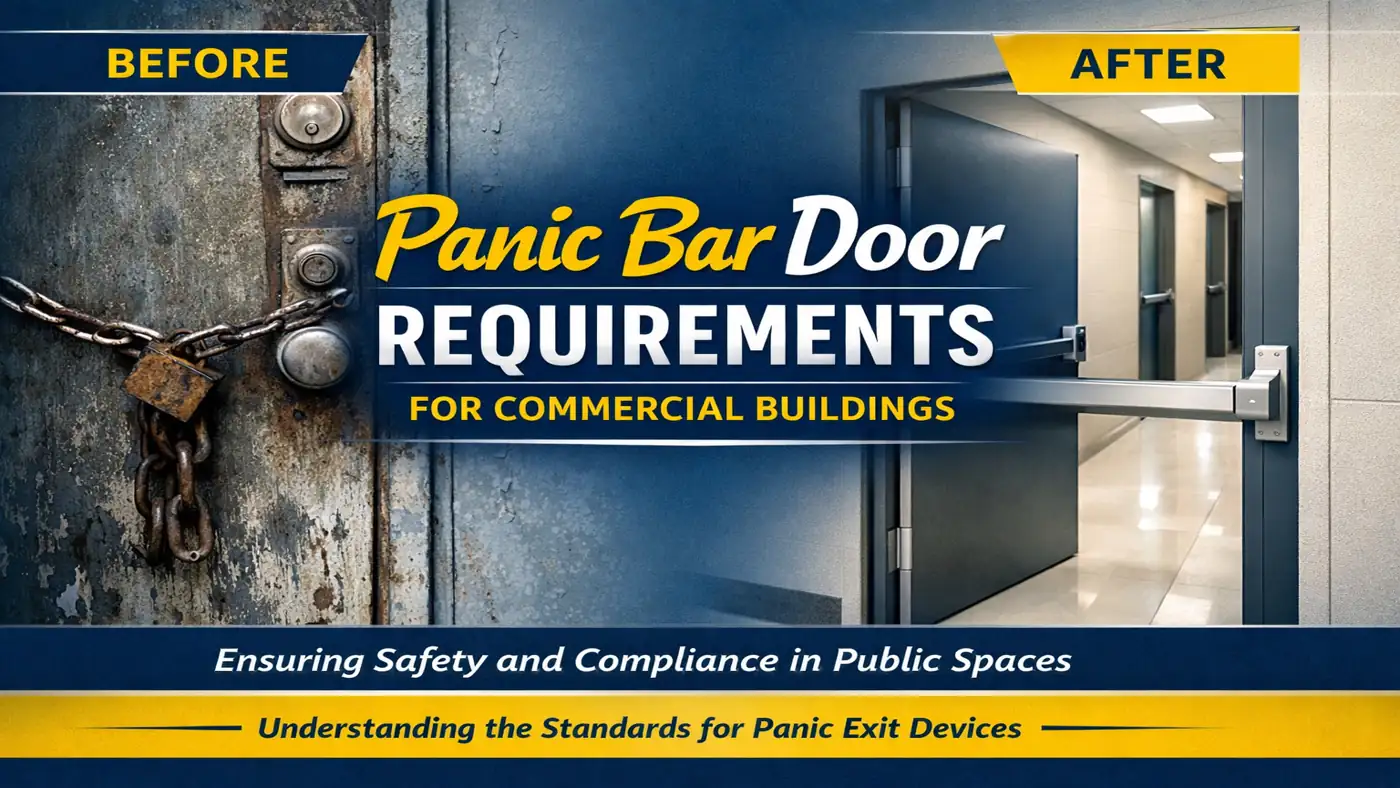

Understanding panic bar door requirements for commercial buildings is not just about meeting regulations—it’s about protecting lives, ensuring safety and security, and avoiding costly violations. In modern commercial buildings, emergency exits must function instantly under pressure. Panic hardware plays a critical role in enabling safe evacuation, especially in high-occupancy spaces like assembly education facilities, offices, and retail environments.
At DFW Affordable Locksmith, we regularly help property owners across Dallas, Plano, Frisco, Fort Worth, Lipan, and Garland meet strict building code standards while upgrading their commercial doors with compliant exit devices.
What Causes Compliance Issues with Panic Hardware?
Many business owners assume installing a push bar or crash bar is enough. However, compliance issues often arise due to misunderstanding building code requirements. Fire doors, emergency door exits, and doors serving areas with more than 100 people must follow strict regulations.
Common causes include:
- Incorrect height of panic hardware installation
- Using residential-grade hardware on commercial doors
- Improper placement on glass door systems
- Failure to meet Americans with Disabilities Act (ADA) standards
- Outdated panic lock door mechanisms
According to the Occupational Safety and Health Administration guidelines on exit routes, exit doors must open easily without special knowledge or effort, reinforcing the importance of properly installed panic hardware.
DIY Panic Hardware Installation: What Business Owners Try
Some property owners attempt DIY panic hardware installation to reduce upfront costs. These methods typically include:
- Buying panic bars for commercial doors online
- Installing crash bars using basic tools
- Retrofitting older doors with new exit devices
- Adjusting push bar alignment manually
While these steps may seem straightforward, they rarely meet full code compliance requirements. Many DIY installations overlook door pressure ratings, fire door compatibility, and ADA accessibility.
For deeper insight into lock systems used in businesses, see commercial locks.
Why DIY Panic Bar Installation Fails
DIY approaches often fail because commercial door systems are complex and regulated. Panic bars must operate flawlessly during emergencies, and even small errors can lead to failure.
Key reasons DIY fails:
- Incorrect measurement of the height of panic hardware
- Improper securing of top and bottom locking points
- Failure to align panic hardware with door frame tolerances
- Non-compliance with disabilities act ADA requirements
- Improper installation on glass door systems requiring reinforced mounting
Additionally, code inspectors often reject installations that don’t meet fire safety standards. This can delay business operations and result in fines.
The National Fire Protection Association Life Safety Code outlines strict requirements for exit devices, emphasizing professional installation.
Are Chemical Fixes or Lubricants a Solution?
Some business owners attempt to fix malfunctioning panic hardware using lubricants or chemical sprays. While these may temporarily improve movement, they do not resolve structural issues.
Risks include:
- Damaging internal components of panic hardware
- Reducing fire door integrity
- Causing delayed door response during emergencies
- Voiding manufacturer warranties
The EPA Safer Choice program also highlights the importance of using approved products in commercial environments to avoid harmful exposure and damage.
When Are Panic Bars Required?
Code Requirements Explained
Panic bars are required when:
- A door serves an occupant load of 100 people or more
- The building is classified under assembly education or public use
- The door is part of an emergency exit route
- Fire doors require fail-safe exit devices
Whether you are installing a crash bar door in Dallas or upgrading a glass door with panic hardware in Plano, these rules apply across jurisdictions.
Signs You Need Professional Panic Hardware Installation
Recognizing early warning signs can prevent serious safety risks:
- Door panic system sticks or delays
- Push bar requires excessive force
- Exit devices fail to latch properly
- Glass doors show mounting instability
- Failed inspection or compliance notice
If you’re experiencing issues, it’s time to consult professionals. Learn why businesses rely on experts in locksmith services.
Why Choose DFW Affordable Locksmith
When it comes to panic hardware installation and code compliance, experience matters. DFW Affordable Locksmith provides specialized installation services tailored to commercial buildings across Texas.
What sets us apart:
- Full compliance with building code and ADA standards
- Expert installation of panic bars for glass doors and fire doors
- Precision alignment for top and bottom locking systems
- Fast service across Dallas, Plano, Frisco, Fort Worth, Lipan, and Garland
- Long-term safety and security solutions
We don’t just install panic hardware—we ensure your entire system protects lives during emergencies.
Explore cost considerations in door costs.
FAQs – Panic Bars for Commercial Doors
When are panic bars required in commercial buildings?
Panic bars are required when a door serves 100 people or more or is part of an emergency exit system. Building code mandates their use in assembly education and high-traffic commercial buildings to ensure safe evacuation without obstruction.
What is the correct height of panic hardware?
The height of panic hardware is typically installed between 34 and 48 inches from the floor to comply with ADA standards. This ensures accessibility for all individuals, including those with disabilities, while maintaining proper door operation.
Can panic bars be installed on glass doors?
Yes, panic bars for glass doors are common in commercial settings. However, they require specialized mounting hardware and reinforcement to ensure structural integrity and compliance with safety standards for emergency exits.
What is the difference between a crash bar and panic bar?
A crash bar door and panic bar refer to the same type of exit device. Both allow doors to open quickly with pressure, ensuring fast evacuation during emergencies while maintaining security from the outside.
Are panic lock doors required for fire doors?
Yes, fire doors often require panic hardware to ensure they open instantly during emergencies. These systems must meet strict fire safety standards and operate without obstruction to protect occupants.
Do panic bars need regular maintenance?
Yes, panic hardware requires routine maintenance to ensure reliability. Regular inspections prevent failure during emergencies and keep the system compliant with building code and safety regulations.
Is professional installation necessary for panic hardware?
Professional installation is highly recommended because improper setup can lead to code violations and safety risks. Experts ensure correct alignment, compliance, and long-term performance of exit devices.
Ensure Full Compliance with Panic Bar Door Requirements
Meeting panic bar door requirements for commercial buildings is essential for safety, legal compliance, and business continuity. Improper installation can lead to failed inspections, fines, and serious risks during emergencies.
Instead of relying on uncertain DIY methods, trust professionals who understand building code, ADA standards, and fire safety requirements. DFW Affordable Locksmith delivers expert solutions designed to protect lives and secure your property.
Take the next step—schedule your inspection or installation today through our locksmith service and ensure your commercial doors are fully compliant and ready when it matters most.