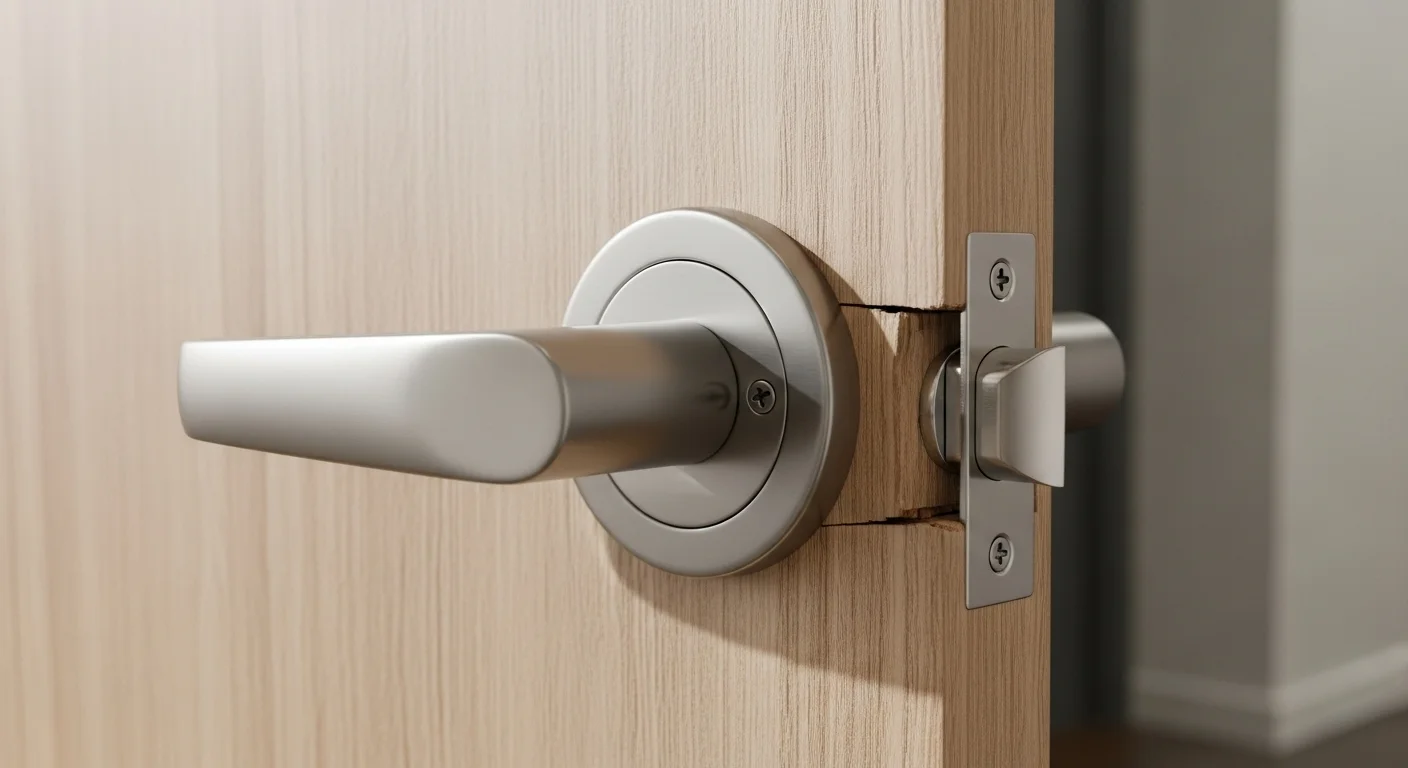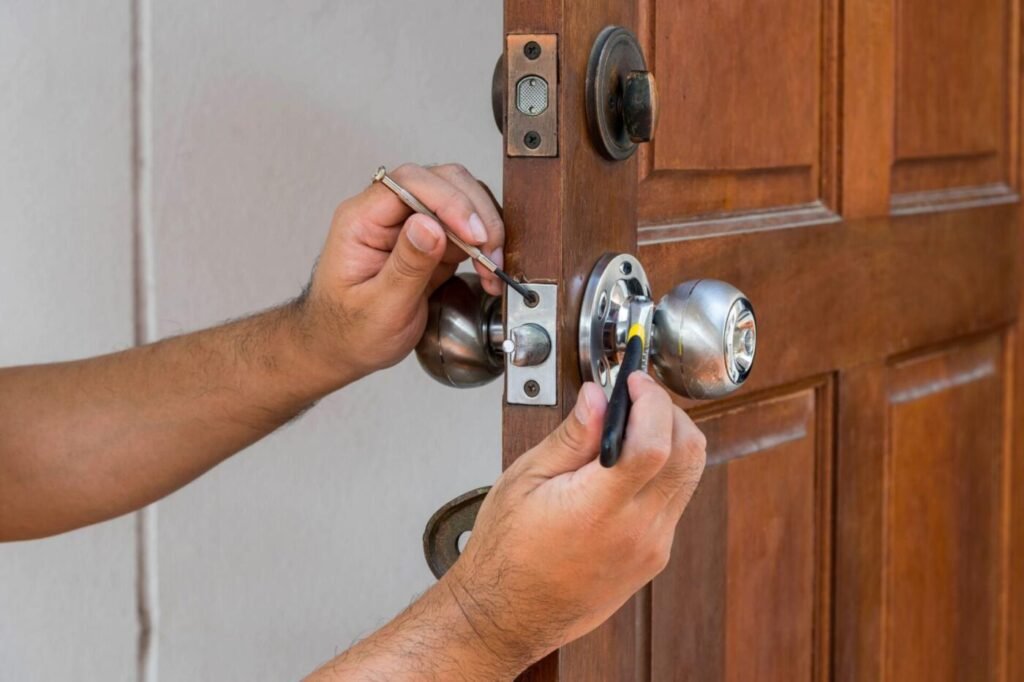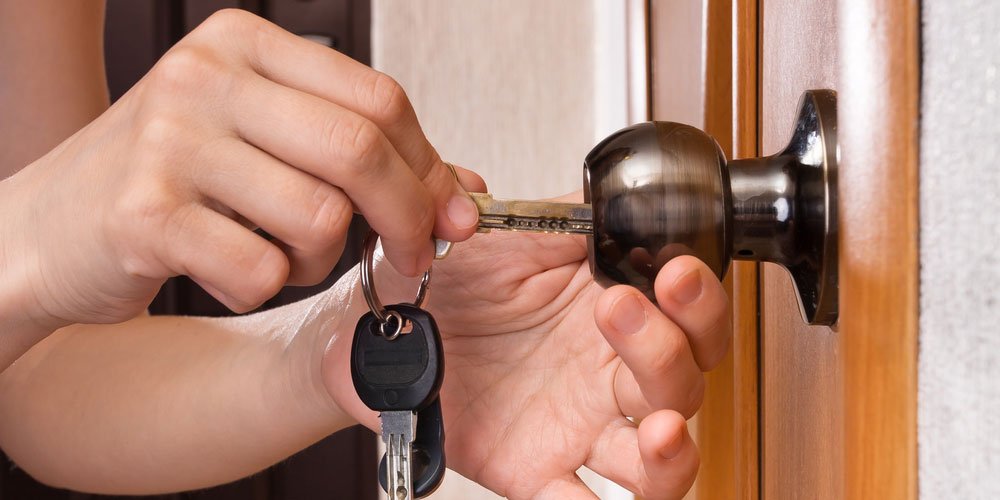

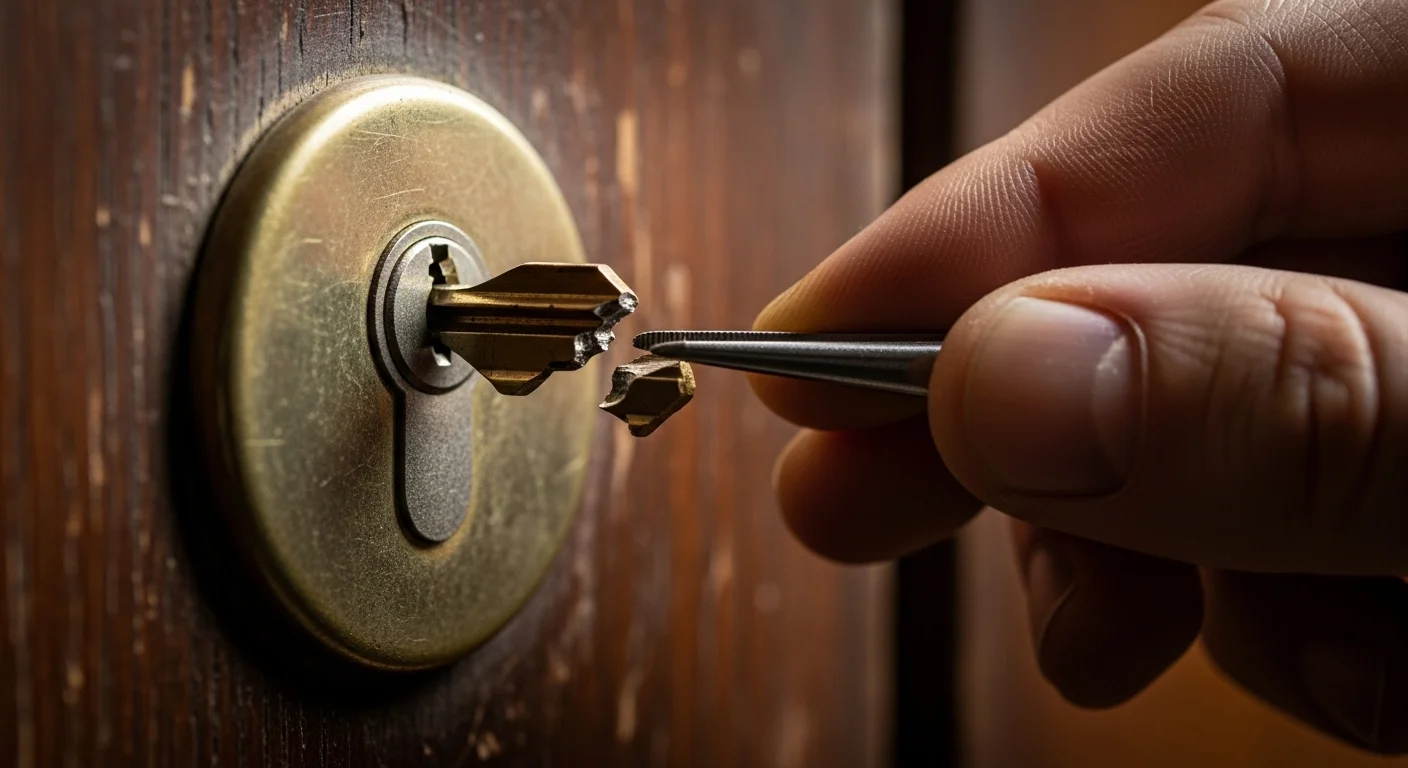

When a key broke inside lock unexpectedly, it’s more than a minor inconvenience. It’s a security issue, a safety concern, and often a sign of deeper lock wear. Many homeowners and business owners attempt quick fixes, only to make the situation worse. Understanding why keys snap, what removal attempts actually work, and when professional service is required can save you time, money, and permanent lock damage.
Why Keys Break Inside Locks
A snapped key rarely happens without warning. Most failures are caused by repeated stress combined with internal lock wear. Older locks develop rough pin edges, metal fatigue weakens keys, and debris inside the cylinder increases resistance. According to burglary prevention guidance from the FBI CPP, compromised locks significantly increase unauthorized entry risk.
Common contributors include:
- Worn key teeth from years of use
- Dry or corroded lock cylinders
- Excessive force when a lock resists turning
- Misaligned doors or frames creating torque
How to Get a Broken Key Out of a Lock Without Tools (And Why It Usually Fails)
Searches for how to get a broken key out of a lock without tools are common during emergencies. While some suggest tapping the door or using gravity, these methods only succeed when the key break is clean and partially exposed.
In most cases, the broken fragment wedges between lock pins. Any movement without proper extraction tools pushes it deeper, making professional removal harder.
Key Stuck in Lock Half Turned: How to Fix Without Damage
A key stuck in lock half turned how to fix scenario usually means the plug is misaligned. Forcing rotation can shear internal pins. Gentle repositioning may help, but repeated attempts typically worsen the jam.
Key Won’t Come Out of Lock When Unlocked
If the key won’t come out of lock when unlocked, internal pin wear or a bent blade is likely. Continued pulling often snaps the key fully, leaving fragments inside the cylinder.
When Removing the Lock Without a Key Becomes Necessary
Learning how to remove a lock without key is usually a last resort. This process often involves drilling or disassembly, which permanently destroys the lock. Professional technicians know when salvage is possible and when replacement is safer.
Why Professional Locksmith Service Is the Smarter Choice
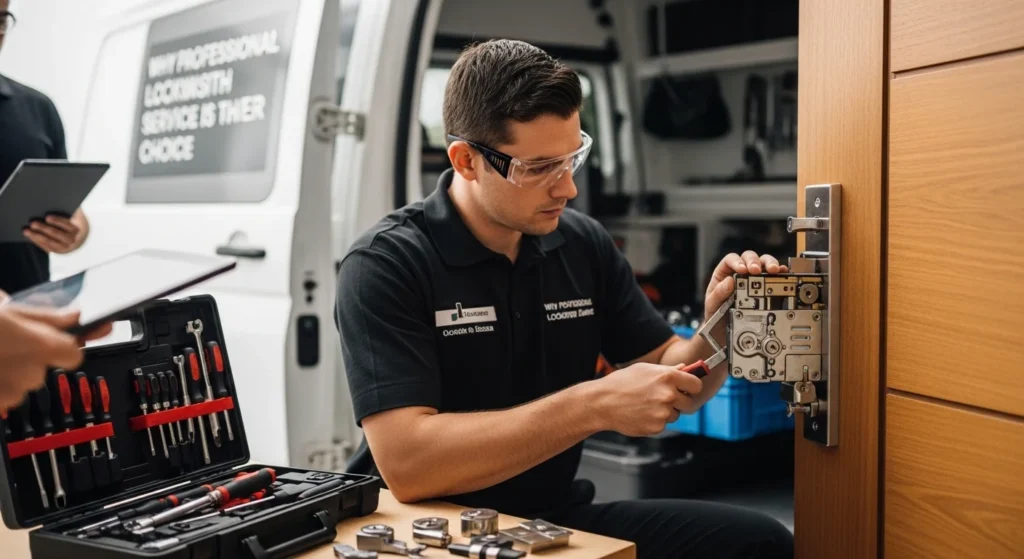
Professional extraction uses precision tools designed to slide alongside pins without damaging internal components. Services like emergency locksmith help allow rapid access without compromising security.
For residential properties, trained specialists can restore full function through home locks, while business owners benefit from secure solutions offered by commercial locksmith services.
The Associated Locksmiths of America emphasizes that improper lock handling increases long-term failure risk and voids many manufacturer warranties (ALOA CG).
Security Risks of Leaving a Broken Key Inside a Lock
A damaged lock signals vulnerability. Even partial cylinder damage can allow forced entry. In high-traffic areas or vehicles, immediate professional attention prevents escalation. Automotive cases are best handled by vehicle specialists services trained in modern ignition systems.
Final Thoughts: Key Broke Inside Lock Situations Need Expert Handling
When a key broke inside lock, quick DIY attempts often cause irreversible damage. Knowing when to stop and call a professional protects your property, your safety, and your investment. If you’re dealing with a stuck or snapped key, scheduling expert service is the safest next step. One call can restore access, secure your lock, and prevent future failures.
FAQs
1. Is it safe to keep using a lock after a key breaks inside?
Using a lock after a key breaks inside is risky. Internal pins or the cylinder may already be damaged. Continued use can cause full lock failure, increase break-in risk, and make future key extraction or repairs more expensive.
2. What causes a key to break suddenly inside a lock?
Keys usually break due to metal fatigue, worn teeth, or excessive force against a resistant lock. Internal issues like dry pins, corrosion, or door misalignment increase stress on the key, causing it to snap unexpectedly during turning.
3. Can lubricating the lock help remove a broken key?
Lubrication may help only if part of the key is visible, but it often pushes fragments deeper. Improper lubricants can attract debris or damage internal components. Professional locksmiths use controlled methods that protect the cylinder instead of risking further damage.
4. Will removing the lock damage the door?
Removing a lock without proper tools often damages the door, frame, or hardware. Drilling or forced removal usually destroys the lock entirely. Professionals assess whether the lock can be salvaged, minimizing damage and preserving both security and structure.
5. When should I call a locksmith instead of trying DIY methods?
You should call a locksmith when the key fragment is flush or deep inside, the lock won’t turn, or DIY attempts fail. Professionals prevent internal damage, restore access safely, and ensure the lock remains secure without costly replacements.