

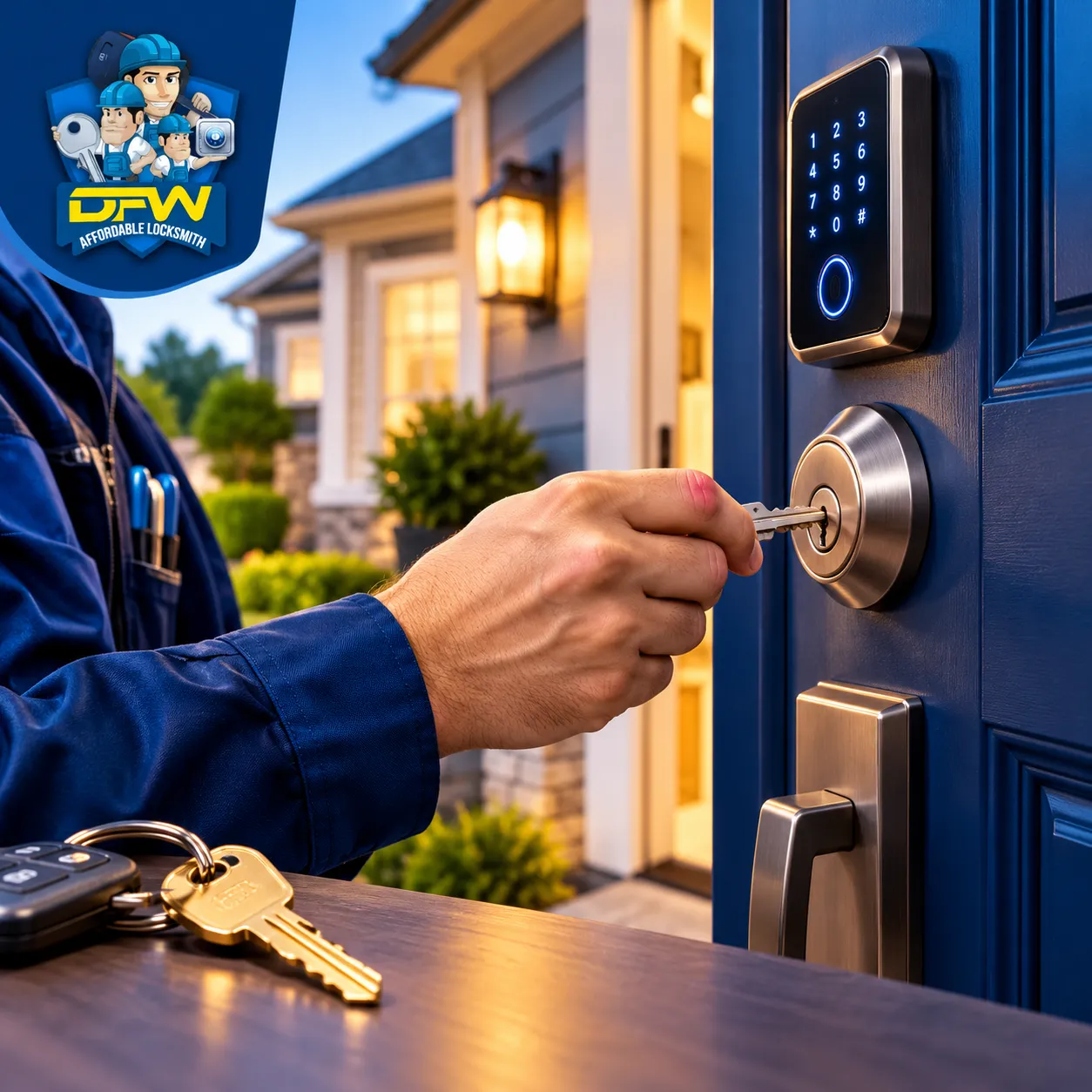

A good lock only works when it fits the door, the frame, and the way your family lives. At DFW Affordable Locks Smith, we meet homeowners across Dallas and Fort Worth who bought strong hardware and fitted it badly. If you want a residential locksmith in DFW, a clear plan beats a quick swap at the hardware store.
Where do you begin? Do you need a new deadbolt, a fresh set of keys, or a smart lock for the front door? Each answer depends on your doors, your budget, and how much risk you want to remove.
This guide gives you a simple security plan for North Texas homes. We cover the lock types, a step-by-step service visit, local costs, and how to choose a licensed provider. Use it to plan your next upgrade, or to check a quote you already hold.
Why home lock security matters across North Texas
Most burglars look for the easiest door, not the hardest one. According to the FBI Uniform Crime Reporting Program (2019), the United States recorded about 1.1 million burglaries, and more than half involved forcible entry. The average loss per burglary was roughly $2,661.
That is where a residential locksmith in DFW earns the fee. The job covers lock installation, rekeying, deadbolt upgrades, smart lock setup, and emergency lockout help. A cheap lock, a short strike plate screw, or a worn latch gives a kick or a pry bar an easy win.
Our area adds its own stress. Texas clay soil shifts, and doors drop out of the square over time. The National Weather Service Fort Worth office records around 100 days a year at 90°F or higher (1991 to 2020 normals), and that heat swells wood and drains smart lock batteries.
Local companies like DFW Affordable Locks Smith focus on home lock work across Dallas, Fort Worth, and the suburbs, so they already know how a Plano new build differs from an older bungalow. That local knowledge shortens the diagnosis. It often saves a second visit.
Deadbolts, smart locks and high-security cylinders compared
Walk the lock aisle and every box claims to be tough. Start with the grade. The American National Standards Institute and the Builders Hardware Manufacturers Association (ANSI/BHMA) rate residential locks from Grade 1 to Grade 3, and Grade 1 is the strongest. For exterior doors, we suggest Grade 1 or Grade 2 hardware.
A standard deadbolt from Schlage or Kwikset suits most front and back doors. A high-security cylinder, such as a Medeco model, resists picking and bumping, which suits homeowners who want extra protection. Smart locks add keypads, app control, and guest codes, so you can let in a dog walker without handing over a key.
Older homes need a different approach. Take a 1930s bungalow in Fort Worth’s Fairmount district. The original mortise lock still works, and the owner loves the brass. A locksmith can keep that hardware, add a Grade 1 deadbolt above it, and fit a long strike plate into the frame. The door keeps its look and gains real strength.
Keep smart lock limits in mind. Batteries die, and Wi-Fi drops. Pick a model with a keypad, a physical key backup, and a low-battery alert, then swap the batteries before summer.
Here is how the main options compare.
| Lock Type | Security Level | Best For | Upkeep |
| Standard deadbolt | Moderate to high | Front and back doors | Low |
| Rekeyed existing lock | Same as current lock | New homes, lost keys | Low |
| High-security cylinder | High | Pick and bump resistance | Low |
| Smart lock | Moderate to high | Guest codes, busy families | Medium |
| Mortise lock | High when maintained | Older homes with original doors | Medium |
What a security check and lock upgrade involves
A careful visit follows a clear order, and each step has a purpose. Here is what a technician does at your door:
- Confirms the address and asks what prompted the call.
- Walk every exterior door, including the garage entry and sliding doors.
- Check the lock, latch, hinges, frame, and strike plate for wear.
- Explains the options in plain terms, with a written price.
- Rekeys, repairs, or installs the hardware after you approve.
- Tests every key, bolt, and latch from both sides, then hands over a receipt.
Rekeying swaps the pins inside a cylinder so old keys stop working. The lock stays on the door, which keeps the cost down. Most rekeys take 15 to 30 minutes per lock.
A licensed locksmith in North Texas will tell you that the frame often fails before the lock does. Strike plates held by three-inch screws that reach the wall stud resist kicks far better than plates held by short screws in thin trim. That one cheap fix does more than many expensive upgrades.
Local rules shape the work too. The Texas Department of Public Safety Private Security Program licenses locksmith companies under Texas Occupations Code Chapter 1702. Building codes based on the International Residential Code require your main exit door to open from inside without a key, which rules out double-keyed deadbolts on most primary exits.
Cost factors for lock work in Dallas and Fort Worth
Prices vary by company, but ranges help you plan. Expect about $20 to $50 to rekey each lock, plus a service call fee of $40 to $100. A new deadbolt installed often runs $100 to $250 per door. High-security cylinders land near $150 to $350 installed, and smart locks usually cost $200 to $500.
What moves a quote up or down? The number of locks, the hardware grade, the shape of the door, and the hour of the call all matter. Emergency lockouts at night often cost $75 to $200, and a long drive across the metroplex can add a travel fee. Ask for a written quote before work starts.
How to choose a licensed provider near you
Anyone can print a van sign, so check the paperwork first. Texas requires locksmith companies to hold a license, and a real company shares its number without fuss. Write it down and verify it with the state.
When you compare a residential locksmith in DFW, look at the basics next. A real provider has a local address, a marked vehicle, a technician who carries ID, and a written quote. Be wary of ads that show one low price and no company name. A rock-bottom phone quote that doubles at your door is a classic warning sign.
Does the company work on home locks every week? A contractor who focuses on residential lock work across DFW, like DFW Affordable Locks Smith, will have handled local code questions, know which hardware holds up in Texas heat, and carry the trade insurance that general handymen often skip. Ask any company to confirm those points in writing.
Reviews help, but read the details. Look for mentions of arrival time, final price, and tidy work. Two or three detailed reviews tell you more than fifty vague ones.
Frequently asked questions
What does a residential locksmith in DFW do?
A residential locksmith installs, repairs, and rekeys home locks. Services include deadbolt upgrades, smart lock setup, broken key removal, and emergency lockout help. Many technicians check hinges and strike plates too, because a strong lock fails when the frame around it is weak.
How much does a locksmith cost in Dallas and Fort Worth?
Most visits carry a service call fee of $40 to $100. Rekeying runs about $20 to $50 per lock, and a new deadbolt costs $100 to $250 installed. Emergency calls cost more. Ask for a written quote before work begins.
How much does smart lock installation cost in Frisco?
Smart locks usually cost $200 to $500 installed, depending on the brand and features. Keypad models with a key backup sit in the middle of that range. Frisco prices match the wider DFW market, so compare two written quotes.
Is it cheaper to rekey or replace a lock?
Rekeying costs less because you keep the existing hardware. Replace a lock when the body is cracked, the latch is damaged, or the grade is too low. A lock in good shape only needs new pins and fresh keys.
Do I need a permit to change door locks in Texas?
Changing or rekeying lock hardware normally needs no permit. Replacing an exterior door or altering the opening can require one, depending on your city. Call your local building department to confirm. Some HOAs limit hardware finishes, so check yours too.
How do I secure a front door in a Texas home?
Start with a Grade 1 or Grade 2 deadbolt with a one-inch throw. Add a reinforced strike plate with three-inch screws that reach the stud. Check that the hinges sit tight and the door closes squarely. Shifting clay soil can pull frames out of line.
Do smart locks last in Texas heat?
Quality smart locks handle Texas summers, but hot afternoons drain batteries faster and can wear plastic keypads on sun-facing doors. Choose a weather-rated model, check the temperature range on the box, and replace batteries before summer starts.
Can a locksmith in Fort Worth work on old mortise locks?
Yes. A skilled technician can repair, rekey, or rebuild many mortise locks, which keeps original hardware in older homes. Parts for very old models can be hard to find, so ask for an inspection and a written plan before work begins.
Should I rekey my locks after buying a house in Plano?
Yes. You cannot know who still holds a copy of the old keys, including past owners, agents, and contractors. Rekeying every exterior lock on move-in day resets access at a low cost and often takes under two hours.
How can I tell if a locksmith is licensed in Texas?
Ask for the Texas license number, a written quote, and technician ID. Check for a local address and a marked vehicle. Be cautious if the caller will not give a business name or quotes a price far below the usual range.
A secure home starts with one short walk. Test each exterior lock, note any door that sticks or wobbles, and list every key you cannot account for. Bring that list to a licensed professional and request a written quote. If you want a local team that handles home lock work across North Texas, reach out to DFW Affordable Locks Smith for a quote and ask about rekeying, deadbolts, or smart lock options. A short call gives you a clear plan and a safer front door.