
A commercial door closer is one of the most overlooked pieces of hardware in a building, yet it affects safety, security, and daily operations. When a closer fails, doors slam on customers, stay open overnight, or fail to latch, which leaves your property exposed. If you manage a business in Dallas, knowing when to repair, when to replace, and how installation works can save you from bigger problems. At DFW Affordable Locksmith, we help businesses across Dallas-Fort Worth keep their doors working properly. This guide covers closer types, warning signs, repair options, and installation tips.
What Does a Commercial Door Closer Do?
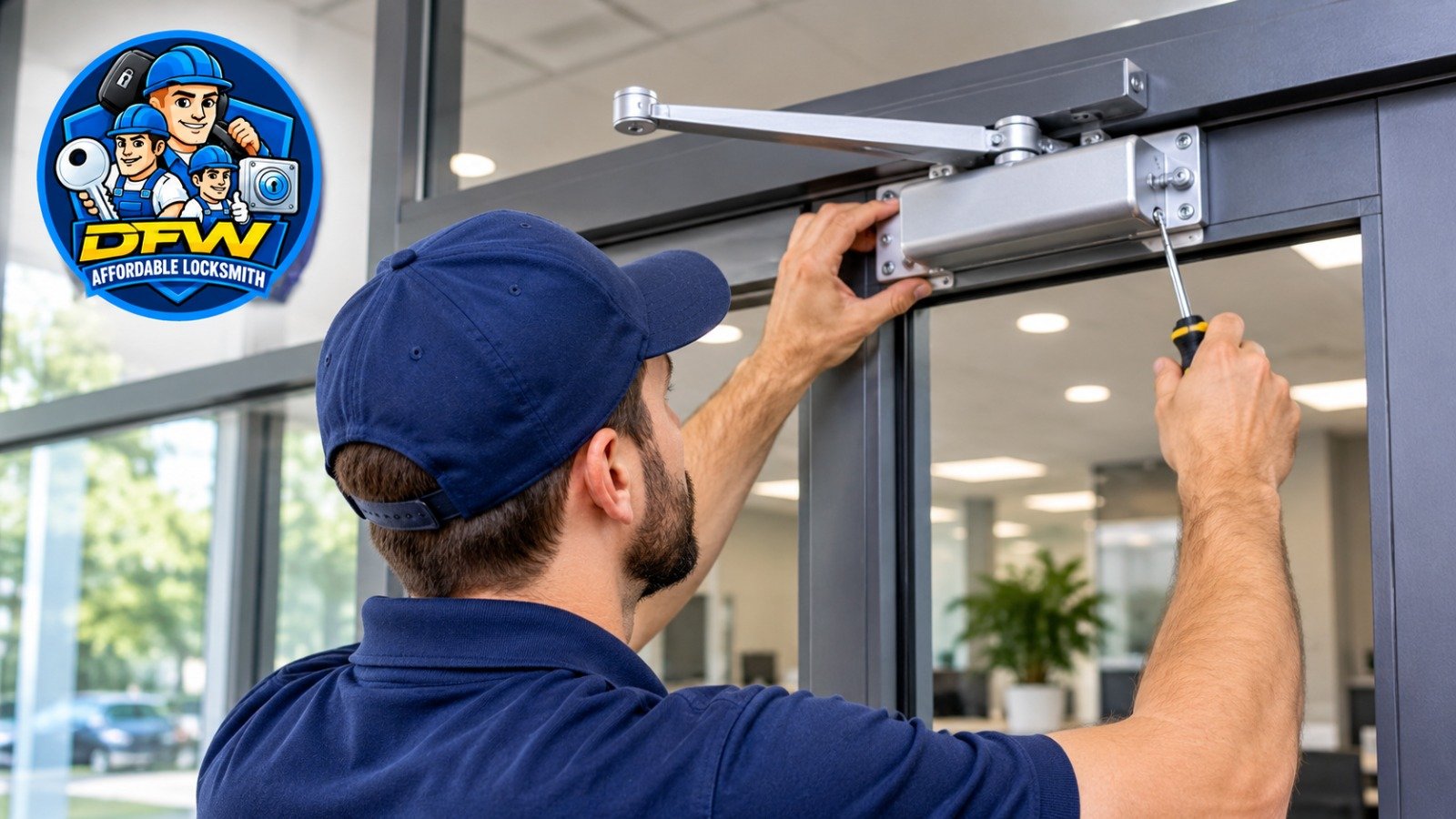
A door closer uses a hydraulic mechanism to close a door smoothly and consistently after every use. It controls how fast the door swings shut and how firmly it latches. This keeps heat and cool air inside, keeps the entrance secure, and prevents doors from slamming. In busy offices, retail stores, clinics, and apartment buildings, a reliable closer protects both people and property.
Common Types of Commercial Door Closers
Choosing the right type depends on your door, frame, and the look you want.
- Surface-mounted closers: The most common option. They mount on the door or frame and are easy to inspect and service, though they remain visible.
- Concealed closers: Hidden inside the door or frame for a cleaner appearance. They suit modern offices and storefronts, but installation is more complex.
- Floor-mounted closers: Installed in the floor beneath the door. They work well for heavy glass doors and high-traffic entrances, and they need floor work during installation.
Signs Your Door Closer Needs Repair
Catching problems early prevents damage to the door, frame, and latch. Watch for these signs:
- The door slams or closes too fast
- The door closes too slowly or drifts open
- The door does not latch fully
- Oil leaks from the closer body
- Jerky or uneven movement as the door swings
- A loose, bent, or cracked arm or bracket
- A door that sags or drags, which may point to worn hinges
Door Closer Repair: Adjust, Fix, or Replace?
Many closer problems can be solved without a new unit. Most closers have adjustment valves that control sweep speed, latch speed, and backcheck. A technician can fine-tune these so the door closes smoothly and latches every time.
Temperature matters in Texas. Closers use hydraulic fluid, which thickens in cold weather and thins in heat, so a door that works perfectly in summer may behave differently in winter. Seasonal adjustments are common.
Tightening loose screws, replacing a damaged arm, or fixing a bracket can restore performance. Replacement is the better choice when the closer leaks fluid, has a cracked body, or keeps failing after adjustment. Before replacing it, check the hinges and door alignment, since these often cause problems that look like a closer issue.
Commercial Door Closer Installation: What to Expect
Proper installation starts with the door itself. The width, weight, traffic level, and exposure to wind all affect which closer you need. The mounting position, such as regular arm, parallel arm, or top jamb, depends on the door and frame.
A professional installation usually follows these steps:
- Assess the door, frame, and hinges
- Select the correct closer size and type
- Mark and drill using the manufacturer’s template
- Mount the body and arm securely
- Adjust sweep, latch, and backcheck speeds
- Test the door under real conditions
An undersized closer wears out quickly, while an oversized one can make the door hard to open. Correct sizing prevents both problems.
Safety, Compliance, and Security
A working closer is part of your building’s safety plan. Fire-rated doors must close and latch on their own to do their job, and propping them open defeats that purpose. Accessibility rules also set limits on opening force and closing speed, so a closer that is too stiff or too fast can create compliance problems. Requirements vary by building type, so confirm local code requirements with your installer.
Security is just as important. A door that fails to latch is an open invitation after hours, even if the lock itself is in perfect condition.
Why Hire a Professional
Closers are under constant spring tension, and a wrong adjustment can damage the door or injure someone. A professional handles the mounting, sizing, and adjustment correctly the first time. Our team provides commercial locksmith services that include door and hardware installation, high-security locks, master key systems, and access control, so your doors work together as one secure system. We are licensed, insured, and available 24/7 for emergencies.
Frequently Asked Questions
How long does a commercial door closer last?
It depends on the quality of the unit, how often the door is used, and how well it is maintained. Heavy-traffic doors wear closers out faster, so regular inspections help.
Should I repair or replace a door closer?
Adjustments and hardware repairs often fix minor issues. If the unit leaks fluid or has a cracked body, replacement is the safer option.
Do door closers need regular maintenance?
Yes. Check the speed settings, tighten screws, and inspect for leaks a few times a year, especially after big weather changes.
How do I know what size closer I need?
Size depends on door width, weight, and exposure. A technician can measure your door and recommend the right model.
Does DFW Affordable Locksmith handle commercial door hardware?
Yes. We provide commercial door hardware installation and repair across DFW. Call (972) 589-4919 to discuss your doors.
Final Thoughts
A reliable door closer keeps your entrances safe, secure, and easy to use. Pay attention to the warning signs, schedule regular checks, and choose professional installation for lasting results. Need help with your commercial doors? Call DFW Affordable Locksmith at (972) 589-4919 or request a free quote today.