
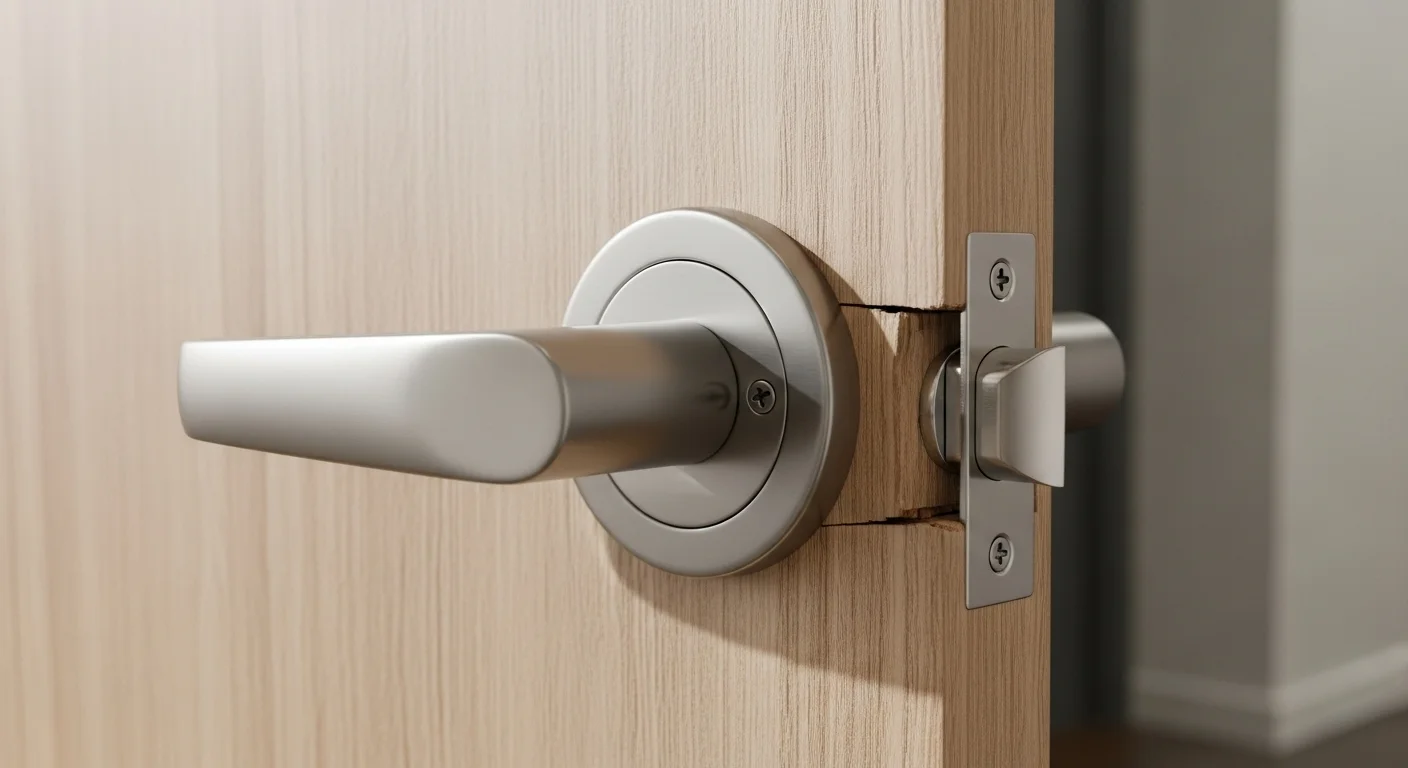

A door handle loose and lock not catching is more than a nuisance—it’s a warning sign. When the handle wobbles and the latch fails to engage, the door is no longer securing your space properly. Many homeowners try quick adjustments, but hidden internal failures often require professional attention to avoid full lock failure.
How Door Handle and Latch Systems Work Together
A door handle operates through a spindle that turns a spring-loaded latch. When everything is aligned, the latch extends fully into the strike plate. When internal components wear out, the system loses tension. According to building safety guidance from the U.S. DFE, improperly secured doors are one of the most common residential security weaknesses.
Door Latch Not Springing Back: A Common Early Warning
If you notice a door latch not springing back, the internal return spring is likely worn or broken. This causes delayed or incomplete latch movement, which prevents the lock from catching consistently.
DIY lubrication may help briefly, but it does not restore spring tension. Continued use accelerates internal wear.
Door Latch Not Catching Strike Plate
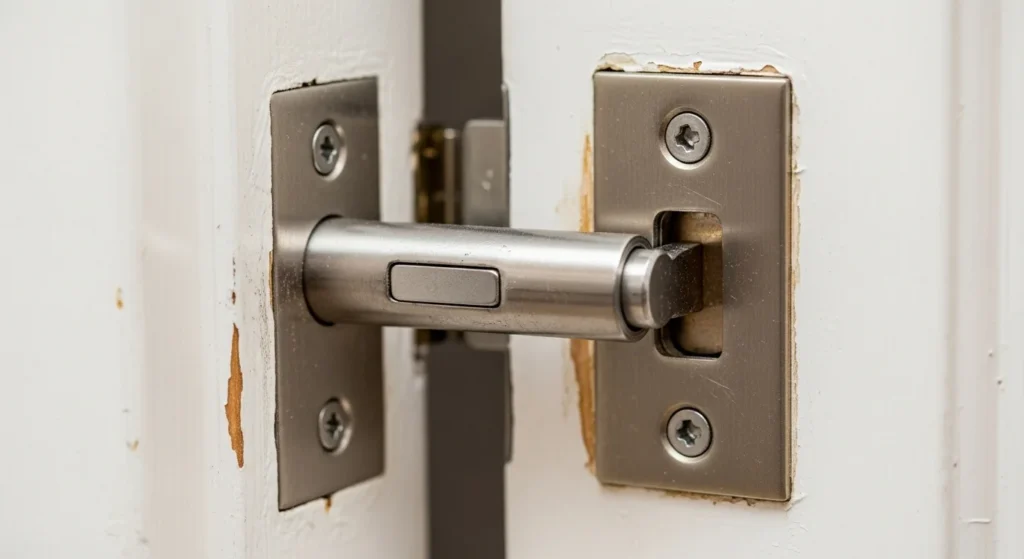
A door latch not catching the strike plate often indicates alignment problems. Door frames shift over time due to humidity, foundation movement, or frequent slamming. While filing the strike plate is commonly suggested online, improper adjustments weaken door integrity.
Engineering research from CM University highlights how small alignment changes can cause cascading mechanical failures in precision systems like locksets.
How to Tighten Door Handles With No Screws (And Why It Rarely Lasts)
Searching for how to tighten door handles with no screws usually leads to hidden release pins or trim plates. While tightening may reduce wobble temporarily, it does not fix worn spindles or stripped internal housings.
Once internal threads are damaged, tightening increases stress and speeds up failure.
Lever Handle Door Lock Not Working Properly
A lever handle door lock not working typically means the internal cam mechanism is slipping. This causes inconsistent latch movement, making the door feel unreliable. Commercial properties often face this issue due to higher usage cycles.
Businesses rely on professional solutions such as commercial locksmith service to prevent access issues and maintain compliance.
Door Knob Loose Spindle and Internal Wear
A door knob loose spindle creates uneven torque, which prevents the latch from fully extending. Over time, this leads to partial engagement, where the door appears closed but opens with light pressure.
Push Lock Door Handle Not Working
When a push lock door handle not working, the internal button or cam is often misaligned. Homeowners attempt repeated resets, but this frequently jams the locking mechanism entirely.
For residential properties, trained technicians providing home lock repair can restore proper function without replacing the entire handle set.
Door Knob Not Opening All the Way
If a door knob not opening all the way, the latch may be dragging against internal housing or the strike plate. Forcing the handle worsens internal scoring and leads to sudden failure.
If your door will not stay closed, the latch sticks, or the handle spins freely, professional service prevents security risks. Urgent issues benefit from emergency assistance, while rekeying may be recommended after hardware replacement using lock rekeying
Final Thoughts: Door Handle Loose and Lock Not Catching Needs Expert Care
A door handle loose and lock not catching is not just wear and tear—it’s a security failure in progress. Temporary fixes may hide the issue, but professional evaluation ensures the door closes, locks, and protects properly. If your door no longer feels secure, scheduling expert service is the smartest next step.
FAQs
1. Why does my door handle feel loose when I turn it?
A loose door handle is usually caused by a worn spindle, stripped internal screws, or weakened internal springs inside the lock mechanism.
2. Can a door lock fail even if it looks fine from outside?
Yes. Internal components can wear out while the exterior appears normal, causing the latch to fail without warning.
3. Is it safe to keep using a door that doesn’t latch properly?
No. A latch that doesn’t catch fully can allow the door to open with minimal pressure, creating a serious security risk.
4. Why do DIY fixes stop working after a short time?
DIY fixes treat symptoms, not internal damage. Worn springs and cams continue to degrade until professional repair or replacement is done.
5. When should I replace the lock instead of repairing it?
If the handle spins freely, the latch sticks repeatedly, or internal parts are damaged, replacement is safer and more cost-effective.